
Reviewed · PHOTOGRAPHY SESSIONS
Discover Lausanne’s most Photogenic Spots with a Local
Lausanne rewards curious walkers. I like this tour for its small-group format and its smart route from the old town to Lake Geneva, with history, architecture, gardens, and good photo stops packed into 90 minutes. I also like that guides such as Ana, Martine, Cristian, Annie, Thomas, and Stefano have adapted the walk to personal interests rather than delivering the same speech to everyone.
The main drawback is the pace. You cover a lot of ground, and the route ends at Denantou Park rather than returning to the center. Public transport, museum visits, and monument entry are extra, and the walk is not recommended if stairs or uneven streets are difficult.
In This Review
- Key points to know before booking
- Why this Lausanne walk works
- Starting at Lausanne’s old castle
- Reading Lausanne’s Cathedral in layers
- Climbing the wooden stairway to the bell tower
- Place de Palud and Lausanne’s civic heart
- A green pause at Montbenon
- Platforme 10, Lausanne’s modern arts district
- Reaching Ouchy and Lake Geneva
- Ending at Denantou Park’s Thai Pavilion
- What $144.88 buys you
- Which guide style suits you best
- Who should book this experience
- FAQ
- How long is the Lausanne photogenic spots tour?
- Where does the tour begin?
- Where does the tour end?
- How many people can join the tour?
- Is public transportation included?
- Are museum and monument entry tickets included?
- Is the tour suitable for people with limited mobility?
- Can I cancel for a refund?
- Should you book it?
Key points to know before booking
- A cross-city route: Begin in Lausanne’s old town and finish beside Lake Geneva at Denantou Park.
- Architecture leads the way: The walk links a 15th-century castle, the Cathedral, old stairways, Belle Epoque buildings, and modern museums.
- A genuinely small format: The experience is designed for a small group, with the stated maximum listed as eight people. The highlights describe groups of up to six.
- Guides shape the visit: You can discuss history, architecture, photography, food, or local life, depending on your interests and walking speed.
- One public transport ride may be useful: A past guest used transit with the guide to reach the lake area, so keep a little extra money available.
- Best for mobile walkers: Steep cobbles, stairs, and a point-to-point route make comfortable shoes essential.
Why this Lausanne walk works
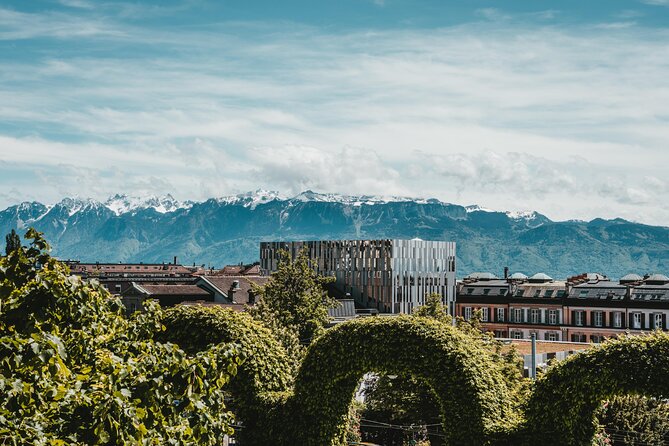
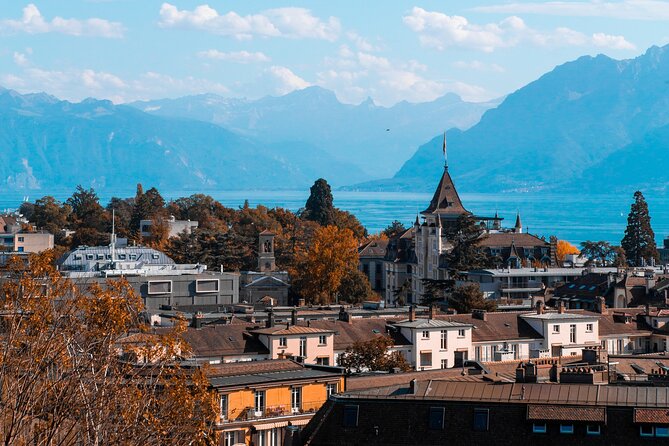
Lausanne is not a city you understand from one postcard view. It climbs from the lake toward an old center on steep streets, then spreads into grand 19th-century neighborhoods, parks, museums, and waterfront promenades. This tour makes that change in character its main story.
I like the way the route connects old and new Lausanne. You begin among defensive stonework and religious buildings, pass through the market heart of the old city, then reach Platforme 10, Ouchy, and Denantou Park. That progression helps you see how Lausanne changed into a modern Swiss city without losing its older bones.
The local guide is the real value here. Guides have explained the Cathedral’s Catholic and Protestant past, pointed out traces of paint on statues, interpreted stories in stained-glass windows, and answered questions about the lake and distant landmarks. Ana, in particular, received praise for her English, clear answers, restaurant advice, and help with public transport. Martine even walked one guest to the correct train connection after the tour.
The format is personal, but it is not a private tour. The maximum is listed as eight people, while the main description presents it as a group of up to six. Either way, this is much smaller than a standard city walk. Ask about your group size when booking if that matters to you.
More Photo Tours in Lausanne:
- Explore the Instaworthy Spots of Lausanne with a Local
★ 5.0 · 2 reviews - DAVOS: Paragliding Tandem Flight In Swiss Alps (Video & Photos Included)
★ 5.0 · 55 reviews - DAVOS: Paragliding For 2 Passengers – Together In The Air! (Video&Photos Incl.)
★ 5.0 · 43 reviews
Starting at Lausanne’s old castle
The meeting point is Rue de la Barre 1, in the old center. From there, the route begins with a 15th-century castle known for its defensive design and Italian influence.
The supplied details do not name the castle, so you should treat this as an exterior-focused stop unless your guide confirms that entry is available. Its value is visual and historical: thick defensive features show Lausanne at a time when security shaped building design, while the Italian style hints at the cultural links that reached across the Alps.
This is a good opening because it gives you a physical sense of the city’s age before the route moves into religious and civic spaces. A guide can also help you read details that are easy to miss on your own, especially when the castle is one stop among many.
Do not expect a long castle visit. With only 90 minutes for the full route, the stop is likely part of a quick sequence of views and explanations rather than a full museum tour.
Reading Lausanne’s Cathedral in layers
The Cathedral is one of the strongest parts of the experience. Several guides have made it a focus, and for good reason. It brings together architecture, religious change, art, and city history in one place.
The guide may explain how the building changed from a Catholic church to a Protestant one. That shift gives the interior extra meaning. Statues that once carried bright paint may now look plain, but traces of color can still tell part of their story. The stained-glass windows also reward explanation, since their images and stories are easier to understand with a local guide beside you.
I would allow yourself a moment to look up, not just listen. Notice the scale of the space, the stonework, the windows, and the marks left by different periods of worship. The Cathedral is not merely a stop for a quick photograph. It is where the tour’s historical thread becomes clearest.
Entry to monuments is not included, so confirm what access is planned. The tour may discuss the Cathedral from public areas, or your guide may explain any admission arrangements. Do not assume a ticket is part of the $144.88 price.
Climbing the wooden stairway to the bell tower
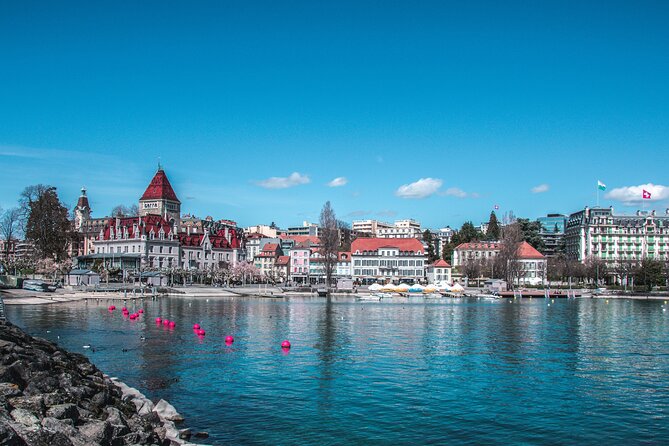
After the Cathedral, the route uses a winding wooden stairway and a steep cobbled street leading toward the bell tower. This is one of the most characterful sections of the walk.
The stairway, lined with cafes and boutiques, gives you the old city in a compact dose. Lausanne can feel polished and modern in one neighborhood, then suddenly medieval in the next. Here, the steep street and timber structure make the city’s hilltop setting impossible to ignore.
This is also where practical concerns matter. The walk is not recommended for people with impaired mobility, and this section explains why. Cobblestones, stairs, and inclines can slow you down. Wear shoes with a firm sole, and tell the guide early if you need a gentler pace. The itinerary can adapt to walking speed, but the route itself remains hilly.
For photographs, look beyond the obvious bell tower. Cafes, shopfronts, timber details, and the changing angle of the street all help show how the old city is built into the slope.
More trips along Lake Geneva:
- The Olympic Museum Entrance Ticket in Lausanne
★ 4.5 · 211 reviews - Vine Stories: Lavaux & Lutry wine walk
★ 5.0 · 67 reviews - Riviera Col du Pillon & Glacier 3000 from Lausanne
★ 5.0 · 32 reviews - (KTL352) – Gruyeres Day Trip with Chocolate Factory from Lausanne
★ 4.0 · 17 reviews
Place de Palud and Lausanne’s civic heart
Place de Palud offers a change of mood. This is the central civic square, where you can see the Fontaine de la Justice and, depending on the day, a country market or craft market.
The fountain gives the square a clear visual anchor, while the market adds local texture. I value stops like this because they show how a city functions today, not just how it looked centuries ago. If a market is operating during your visit, you may get a better sense of regional food, handmade goods, and daily routines than you would inside a museum.
Market activity can vary, and the experience may change with the day and weather. That uncertainty is part of the appeal, but it also means you should not book this tour solely for a particular stall or market scene.
Place de Palud is a useful spot to ask your guide for food suggestions. One guest received a restaurant recommendation from Ana and enjoyed it after the tour. That kind of advice can be worth more than a generic list, especially when you have only a short stay in Lausanne.
A green pause at Montbenon
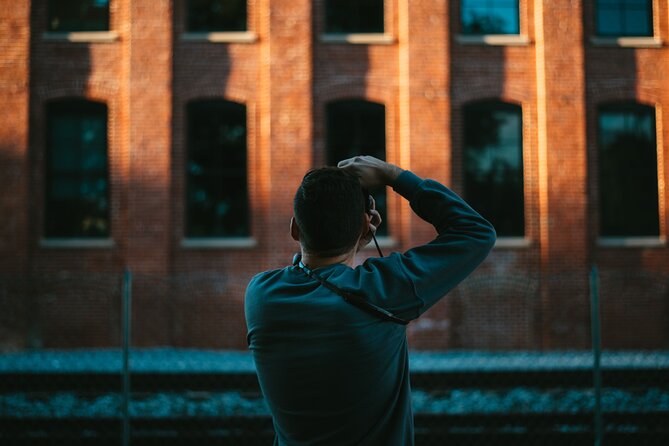
The route then reaches a park with views, a romantic fountain, and large civic buildings. The key landmarks here are the Casino de Montbenon, home to the Swiss Film Archive, and the Renaissance-style Palais de Justice.
This stop gives your legs a break after the steep old-town streets. It also broadens the architectural story. The castle and Cathedral represent earlier Lausanne, while these grand buildings reflect a city presenting itself as a civic, cultural, and administrative center.
The park is particularly useful for photographs because it combines open views with formal architecture. The fountain adds a softer foreground, while the buildings provide strong lines and detail. Your guide can help you decide where to stand and what distant features are worth framing.
Still, remember the time limit. You will likely get an orientation and photo opportunity rather than time inside the Swiss Film Archive or Palais de Justice. Museum and monument admissions are not included.
Platforme 10, Lausanne’s modern arts district
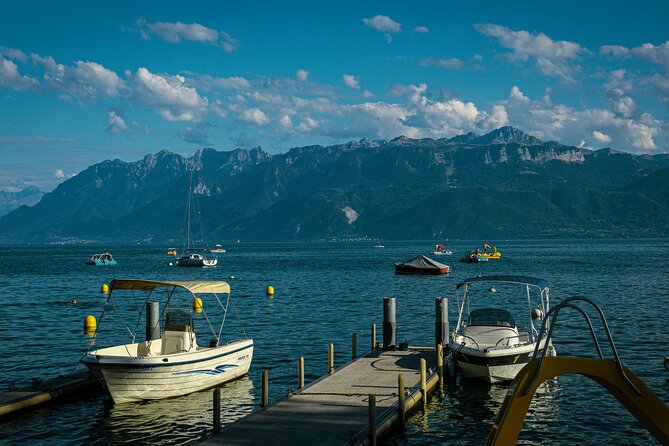
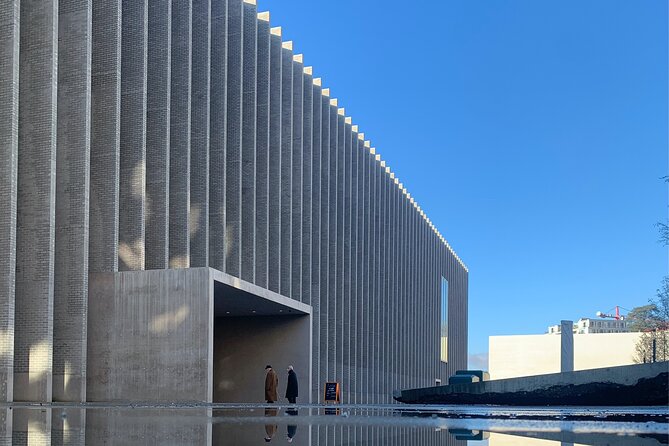
Platforme 10 introduces the city’s newer cultural side. It brings fine art, photography, design, and related creative work together in one arts district.
This is a welcome contrast after the older buildings. Lausanne is not frozen in its past, and Platforme 10 makes that clear. If you care about contemporary culture, design, or photography, this stop may be one of the most useful parts of the route because it points you toward a place you could revisit later.
The tour does not include museum entry, so expect an outside orientation or a brief introduction rather than a full gallery visit. If you want serious time with the collections, plan a separate visit and ask your guide how to fit it into your schedule.
For photographers, Platforme 10 may also be useful as a lesson in how Lausanne keeps adding new cultural spaces while preserving its older districts. The contrast is part of the city’s appeal.
Reaching Ouchy and Lake Geneva
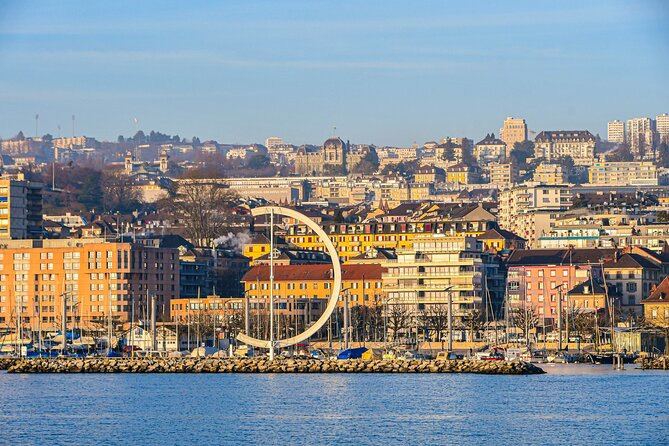
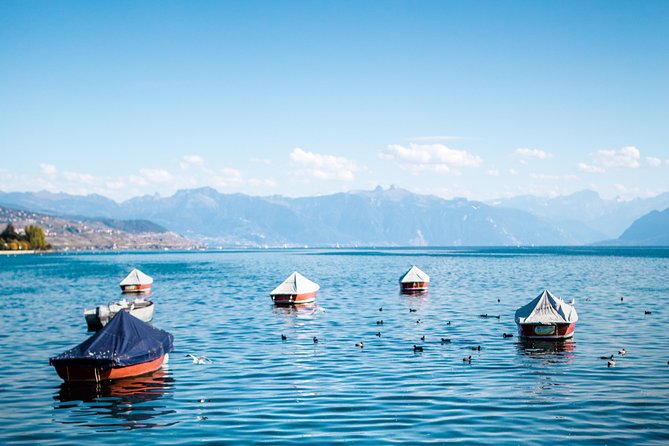
The journey continues to Ouchy, the lakeside district. Here, gardens, elegant Belle Epoque homes, and a waterfront walk with sculptures replace the tight streets of the old town.
This change is one of the tour’s best features. You see Lausanne not only as a hill city but also as a place shaped by its relationship with Lake Geneva. The open water views offer a natural counterpoint to the Cathedral and castle, while the grand homes show how the lakeside developed a more leisurely, refined character.
A past guest described using public transit once to reach the lake area with the guide. That detail matters. The route covers a sizeable stretch of Lausanne, and the exact movement between districts may depend on the group, weather, and guide. Public transport tickets are not included, so budget for them.
Ouchy is also a good place to take the kind of photographs that need space: water, gardens, sculptures, buildings, and distant views. Weather will shape this part of the experience more than the old town section. On a clear day, the lake is the star. In poor weather, the guide may alter the sequence or replace certain stops.
Ending at Denantou Park’s Thai Pavilion
The final stop is Denantou Park, where a Thai Pavilion sits beside the river. The pavilion was a gift from Thailand to Lausanne, and its setting gives the walk a calm, unexpected finish.
This is a memorable ending because it does not simply repeat the lake views. You get an international cultural note, water, greenery, and a striking architectural subject in one place. The park also gives you room to slow down after the city streets.
The official end point is listed as Parc du Denantou, on an unnamed road in Lausanne. The tour does not return you to the old town, so check your onward route before setting out. The guide may help with directions, as Martine did for one guest, but transport after the tour remains your responsibility.
What $144.88 buys you
At $144.88 per person, this is not a budget city walk. The value depends on how much you want from a local guide in a short amount of time.
You are paying for a small group, a route that crosses several parts of Lausanne, local explanations, and recommendations shaped around your interests. The guide can connect religious history, architecture, markets, museums, lake views, and public transport in a way that is hard to reproduce with a map and a few signs.
The price is harder to justify if you want long interior visits. Museum tickets, monument admissions, personal expenses, and public transport are extra. You also need to be comfortable with a brisk 90-minute route.
I would see this as a first orientation, not a complete city tour. It can help you decide where to return later, especially the Cathedral, Platforme 10, Ouchy, or the Swiss Film Archive. If you are staying only briefly, the cross-city route makes the cost more understandable.
Group discounts are available, which may improve the value for parties booking together. Confirmation is provided at booking, and free cancellation is available up to 24 hours before the start time. Changes or cancellations inside that window are not accepted for a refund.
Which guide style suits you best
The experience is hosted by an independent local, so the personality and approach may vary. That is a feature, but it also means you should share your interests at the start.
Cristian has tailored the route around specific interests and explained small visual details at the Cathedral. Ana has been especially effective for English-speaking visitors who wanted clear history, answers to many questions, restaurant help, and assistance with transit. Stefano has personalized the walk around personal preferences, while Thomas focused strongly on Swiss history and Cathedral visits. Annie provided a mix of local history, area knowledge, and scenic viewpoints.
You do not choose a fixed museum specialist or a single named guide based on the information provided. Guide availability can change. If a particular guide is important to you, ask before booking rather than assuming that person will lead your walk.
Who should book this experience
I would recommend it to a first-time visitor who wants quick orientation and prefers conversation to a large scripted group. It also suits anyone who likes architecture, city history, photography, and scenic viewpoints in equal measure.
English speakers are well served, and the guide can answer questions in English. Service animals are allowed, public transport is nearby, and most people can participate, provided they are comfortable with stairs, steep streets, and cobbles.
I would be more cautious if you want a slow photographic session, extensive museum time, or a relaxed lakeside stroll. Ninety minutes is short for the number of places included. The itinerary may change with weather, and the guide may adapt the stops to the group’s pace and interests.
FAQ
How long is the Lausanne photogenic spots tour?
The experience lasts approximately 1 hour and 30 minutes.
Where does the tour begin?
It begins at Rue de la Barre 1, 1005 Lausanne, Switzerland.
Where does the tour end?
It ends at Parc du Denantou, 1006 Lausanne, Switzerland.
How many people can join the tour?
It is presented as a small-group experience. The information lists groups of up to six in the highlights and a maximum of eight elsewhere.
Is public transportation included?
No. Public transportation tickets are not included. A guide may use public transit with the group to reach the lake area, depending on the route.
Are museum and monument entry tickets included?
No. Entry tickets for public transportation, museums, and monuments are separate.
Is the tour suitable for people with limited mobility?
It is not recommended for guests with impaired mobility because the route includes steep cobbled streets and a winding wooden stairway.
Can I cancel for a refund?
Yes. You can cancel up to 24 hours before the start time for a full refund. Cancellations or changes made less than 24 hours before the experience are not accepted for a refund.
Should you book it?
Book this tour if you want a fast, personal introduction to Lausanne and like seeing a city through buildings, viewpoints, and local stories. The Cathedral, old stairway, Montbenon, Ouchy, and Thai Pavilion give you a fine range of settings in a short time.
Skip it if you want deep time inside museums or a slow route with few hills. For most fit visitors with limited time, the strongest reason to book is the guide’s flexibility. Tell Ana, Cristian, Stefano, Thomas, Annie, Martine, or whoever leads your walk what interests you, wear good shoes, and treat the tour as a smart starting map for the rest of your Lausanne stay.
Just added in Lausanne
- Explore the Instaworthy Spots of Lausanne with a Local★ 5.0 · 2 reviews
- Winter Gruyères, chocolate & cheese tour from Lausanne★ 4.5 · 10 reviews
- Taxi, Airport Transfer and Limousine Service in Switzerland★ 5.0 · 1 review
- Panoramic Wine Tour From Lausanne★ 5.0 · 8 reviews
- Lausanne (City Center) Scavenger Hunt and Sights Self-Guided Tour★ 4.5 · 14 reviews
- Round trip cruise from Lausanne to Chillon★ 3.5 · 15 reviews
- (KTL303) – Winter Tour Montreux and Chaplin’s World from Lausanne★ 5.0 · 7 reviews
- Taste Lausanne – A Full Swiss Food Tour by Do Eat Better★ 5.0 · 14 reviews
Photography Sessions, compared.
DAVOS: Paragliding Tandem Flight In Swiss Alps (Video & Photos Included)
Read our review →
DAVOS: Paragliding For 2 Passengers – Together In The Air! (Video&Photos Incl.)
Read our review →
Moments in Basel: Personalized Tour & Photo Session
Read our review →
Discover Basel’s most Photogenic Spots with a Local
Read our review →
Discover Interlaken’s most Photogenic Spots with a Local
Read our review →
Instagram and Photo tour of Lugano with a professional photographer.
Read our review →Browse the lists this tour appears in