
Reviewed · LUCERNE TOURS
Explore Lucerne’s Art and Culture with a Local
Lucerne has more to show than pretty painted walls. This 90-minute walk links street art, modern design, grand churches, and major city sights, giving you a lively first look at how old and new Lucerne fit together. I especially like the small group of up to eight and the chance to see the city through a local’s personal interests.
I also like that the route moves from Lake Lucerne to the Lion Monument, passing the KKL, Chapel Bridge, and several important churches along the way. The main thing to check before booking is the admission detail: the tour description says Lucerne’s Museum of Art is included, while the inclusions also say admission tickets are not included. That point should be confirmed before you pay $136.11 per person.
In This Review
- Key things to know before you book
- Why this Lucerne walk works well as an introduction
- Starting beside Lake Lucerne at KKL Luzern
- Torbogen and the memory of Lucerne’s railway station
- Jesuit Church and Baroque drama on the Reuss
- Franciscan Church and a Gothic change of pace
- A public building beside the River Reuss
- Chapel Bridge and the Water Tower
- Hofkirche and Lucerne’s Renaissance voice
- Ending at the Lion Monument
- The local guide is the heart of the tour
- Is $136.11 a fair price?
- Who should book this walk?
- Should you book Explore Lucerne’s Art and Culture with a Local?
- FAQ
- How long does the Lucerne art and culture tour last?
- Where does the tour begin?
- Where does the tour end?
- How many people can join the tour?
- Is Lucerne’s Museum of Art admission included?
- Can I cancel for a full refund?
Key things to know before you book
- A compact art-and-history route: In 90 minutes, you connect contemporary art with Lucerne’s medieval, Baroque, Renaissance, and civic landmarks.
- A genuinely small group: With a maximum of eight people, the walk should feel more personal than a large city tour.
- A local guide shapes the outing: Your guide can respond to your interests, as Maria did by asking about them before the tour.
- A strong first-day activity: The route covers many of Lucerne’s headline sights, making it useful when you are still finding your way around.
- A dramatic finish: The walk ends at the Lion Monument, near the Glacier Garden and Bourbaki Panorama Lucerne.
- One price detail needs checking: The description gives conflicting information about Museum of Art admission.
Why this Lucerne walk works well as an introduction
I see this tour as a city orientation with an art focus, not as a museum lecture or a long specialist walk. You get a broad sample of Lucerne: lakeside architecture, a former railway entrance, churches, a famous bridge, public buildings, and a moving monument.
That range is the main strength. Lucerne can seem at first like a postcard town built around Chapel Bridge. The walk helps you look past the bridge and notice how the city’s identity also comes from concert halls, public art, religious buildings, and modern design.
The 90-minute length is practical. You can fit it into a morning or afternoon without giving up half your day. At the same time, the route includes many stops, so you should expect an overview rather than long visits inside every building.
The group limit matters here. A maximum of eight people gives your guide a better chance to answer questions and adjust the pace. It also makes it easier to hear explanations in streets and public spaces. If you prefer quiet, independent wandering, a guided route may feel structured. If you want context quickly, that structure is useful.
More things to do in Lucerne:
- Mount Pilatus Summit from Lucerne With Lake Cruise
★ 4.5 · 1,260 reviews - Jungfraujoch Top of Europe Day Trip from Lucerne
★ 4.5 · 840 reviews - Lucerne Walking & Boat Tour: The Best Swiss Experience
★ 4.5 · 417 reviews
Starting beside Lake Lucerne at KKL Luzern
The meeting point is Landungsbrücke 1, 6003 Luzern, near the lake and public transportation. Beginning here places you beside KKL Luzern, Lucerne’s major modern cultural building.
Jean Nouvel designed KKL Luzern, which is known for its striking architecture and exceptional acoustics. The building serves as a civic and cultural venue, so it gives the tour an immediate way to discuss Lucerne beyond its old streets and church towers.
I like this as a starting point because it sets up the central idea of the walk: Lucerne is not frozen in the past. Its cultural life includes serious contemporary architecture and performance spaces alongside centuries-old buildings.
You will not spend the whole tour inside KKL Luzern, so think of this stop as an introduction to the city’s modern side. If architecture interests you, pay attention to how different this setting feels from the medieval center you will see later.
Torbogen and the memory of Lucerne’s railway station
The route continues to Torbogen, a restored entrance portal connected with Lucerne’s former railway terminus. It also features monumental artwork, giving you another example of how public spaces can preserve and reinterpret the city’s past.
This is a useful stop because it connects transport, urban change, and art. A railway entrance is not simply an old doorway. It reflects how people arrived in Lucerne and how the city presented itself to newcomers.
The monumental artwork adds a contemporary layer to the site. Your guide can help you read it as part of Lucerne’s public culture rather than treating it as something to pass without a second glance.
Because this is a walking tour with many stops, the explanation here will likely be brief. That is not a serious flaw, but it is worth knowing. You will see several important places, though you will not have the time for a detailed study of each one.
Jesuit Church and Baroque drama on the Reuss
At the Jesuit Church, the mood shifts from modern civic design to Baroque ornament. The church is known for its ornate stucco, impressive high altar, and strong acoustics, which suit concerts and organ lessons.
For me, this is one of the most rewarding parts of the route. The interior gives you a clear sense of how architecture, decoration, music, and religious ceremony once worked together. Even if you are not especially interested in church art, the contrast with KKL Luzern should be memorable.
The church sits on the Reuss, so the walk also gives you a changing sense of Lucerne’s setting. Water, bridges, and buildings are closely linked here. You are not moving through isolated attractions, but through a compact city where major sights sit within a short walk of one another.
You should allow yourself a moment to look up at the stucco and toward the altar. Since the tour is only about 90 minutes, your time at each location will be limited, and a guide’s short explanation can help you decide what deserves your attention.
A completely different kind of day:
- Lake Lucerne Panoramic Sightseeing Cruise
★ 4.5 · 363 reviews - Mt Titlis Cable Car from Engelberg with Ice Flyer
★ 4.5 · 290 reviews - Lucerne’s Hidden Secrets by Electric Cargo Bike
★ 5.0 · 288 reviews - Lucerne Swiss Museum of Transport Entrance Ticket
★ 4.0 · 206 reviews
Franciscan Church and a Gothic change of pace
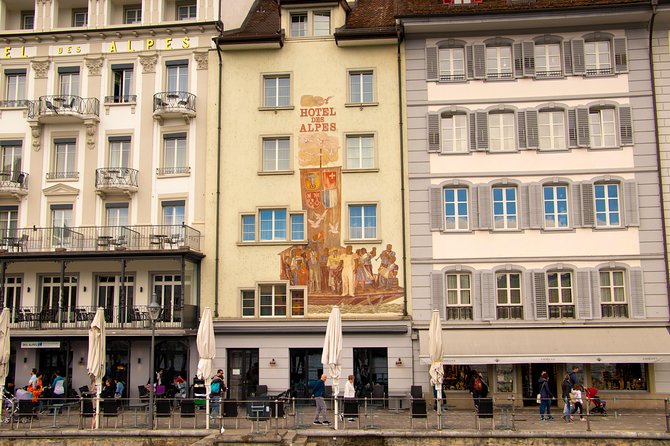
The Franciscan Church brings another sharp change in style. Built in the 13th century, it has Gothic interiors and what is described as Switzerland’s most ornate pulpit.
This stop gives the tour a useful architectural comparison. The Jesuit Church presents Baroque decoration, while the Franciscan Church offers an older Gothic character. Seeing them in the same walk helps you notice that Lucerne’s churches are not all variations of one design.
The pulpit is the detail to seek out. It is easy to enter a historic church, glance toward the altar, and leave. Here, your guide can direct your eyes to a feature that might otherwise be missed.
As with the other church stops, this is not a substitute for a dedicated religious art tour. The value lies in the sequence. You get a fast but clear lesson in how Lucerne’s sacred architecture changed over time.
A public building beside the River Reuss
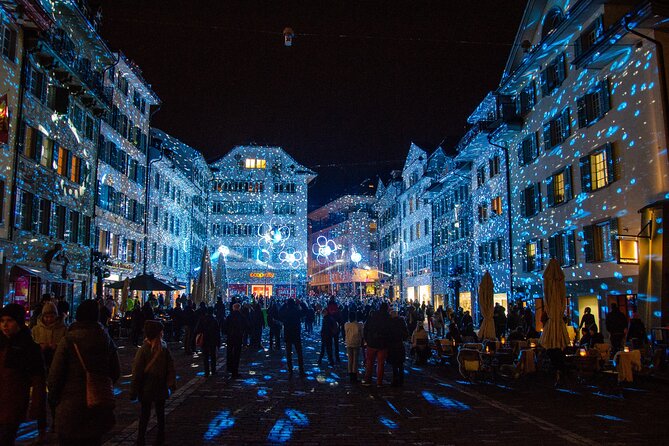
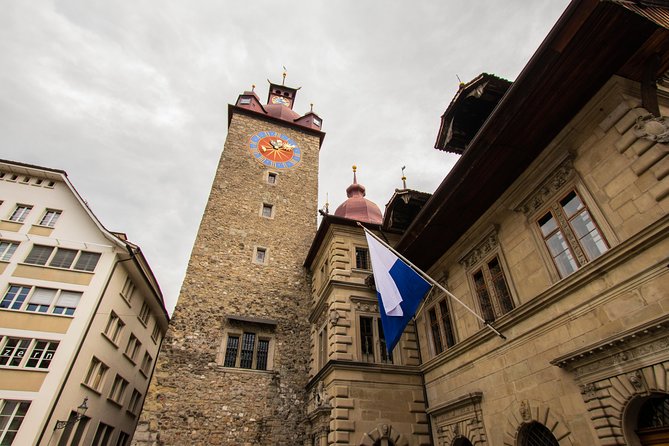
The route also includes one of Switzerland’s prettiest public buildings on the banks of the River Reuss. The available details do not identify the building by name, so I would treat this as a place where your guide’s explanation will be especially useful.
Its position beside the river matters. Lucerne’s public architecture is often best understood from the surrounding streets and water views, not just from inside. You will have a chance to see how the building fits into the city’s civic center.
This stop also helps break up the church-heavy middle section of the walk. The tour is not only about religious monuments. It includes public spaces and civic design, which supports the broader look at Lucerne’s cultural identity.
Chapel Bridge and the Water Tower
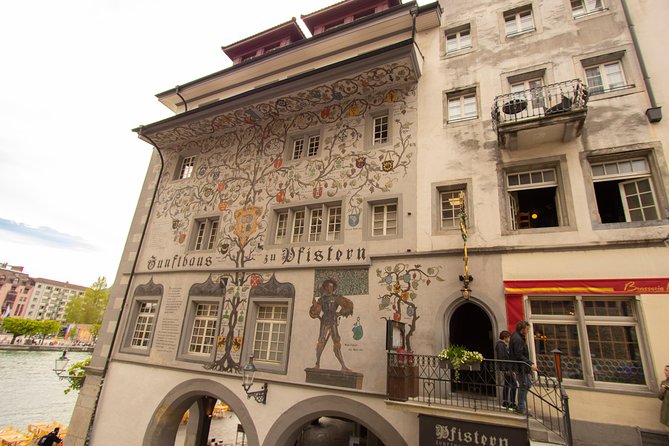
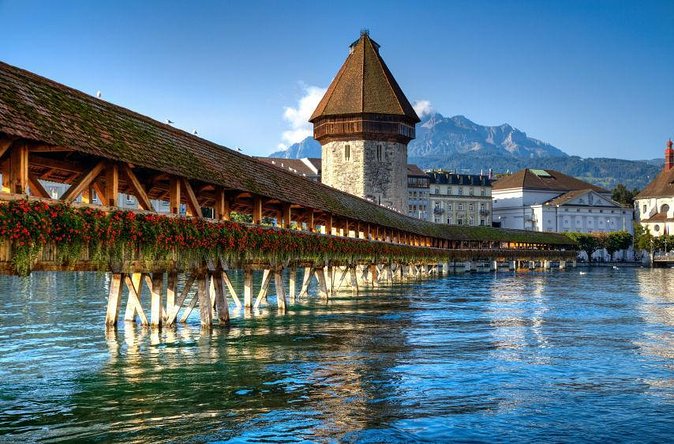
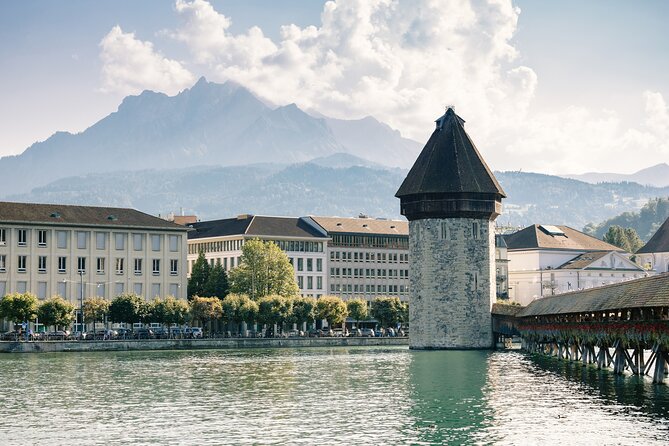
No first look at Lucerne would feel complete without Chapel Bridge. It is the city’s most photographed sight, and the route lets you admire both the bridge’s painted cycle and the distinctive Water Tower.
The bridge is famous, but fame does not make it less worthwhile. The paintings give the crossing a visual story, while the wooden structure and tower create the image most people associate with Lucerne.
This is also the stop where crowds and photography may slow things down. You should expect a popular public place, not a quiet museum room. A small group helps your guide keep everyone together, but you will still need to make space for other people using the bridge.
Look above you as you cross. The painted panels are easy to overlook when you are focused on the river or trying to take a photograph. Your guide’s role here is valuable because a little context can turn a quick crossing into a more thoughtful visit.
Hofkirche and Lucerne’s Renaissance voice
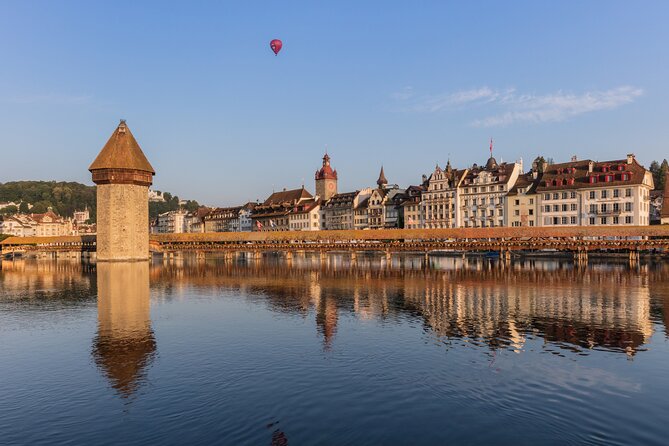
The Hofkirche adds another layer to the city’s religious and architectural story. This impressive Renaissance church carries centuries of history, and its interior offers a quieter, more reflective part of the route.
After the ornament of the Jesuit Church and the Gothic character of the Franciscan Church, the Hofkirche helps you see Lucerne’s range again. The walk is strongest when it lets you compare styles rather than presenting every sight as simply old or beautiful.
The church also gives the tour a sense of continuity. You are moving through buildings that have shaped the city for generations, but the guide keeps the focus on what you can see around you now.
If church interiors are a priority for you, this stop may leave you wanting more time. That is the tradeoff of the format. You receive a connected overview, not an extended visit at each church.
Ending at the Lion Monument
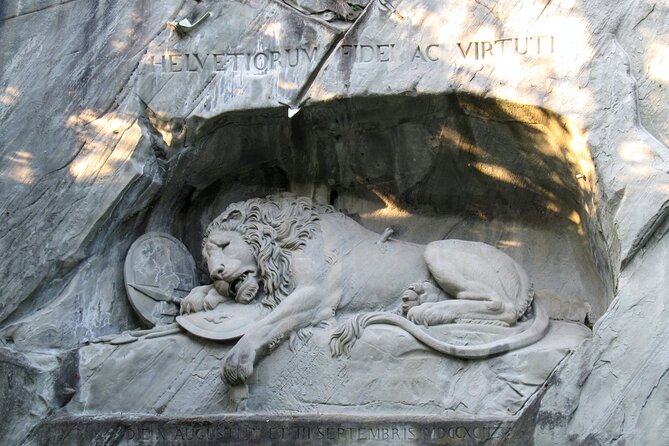
The walk finishes at the Lion Monument on Denkmalstrasse 4, 6002 Luzern. This powerful stone sculpture commemorates fallen heroes and is one of Lucerne’s most emotional landmarks.
Ending here is a smart choice. The Lion Monument has a different tone from the lively bridge, the concert hall, and the decorated churches. Its carved expression and subject matter give the final stop a serious weight.
You can continue your sightseeing afterward. The endpoint is near the Glacier Garden of Lucerne and Bourbaki Panorama Lucerne, so the tour fits neatly into a longer afternoon of cultural visits. The information provided does not say that admission to either place is included, so plan to handle those as separate visits.
The end point also makes the route practical. You do not return to the starting point, so you should be comfortable continuing from the Lion Monument or arranging your next stop from there.
The local guide is the heart of the tour
The most encouraging detail from the two available ratings is the personal contact before the walk. A guide named Maria wrote to one group in advance to ask what interested them. That simple step matters because an art walk can otherwise become a fixed list of facts.
The same feedback praised Maria’s love for Lucerne and the way she made the tour fun. I would place real value on that. A local guide who notices what catches your eye can help you see more than a standard route allows.
The guide’s personality will shape the experience, and no tour can guarantee that every guide will match your preferred style. Still, the small group and local format create better conditions for conversation than a large coach outing.
The perfect use of this tour is to ask questions. Tell your guide if you care most about architecture, public art, church interiors, music, or city history. You may get more from the walk by sharing your interests early rather than waiting for the guide to guess.
Is $136.11 a fair price?
At $136.11 per person, this is not a budget city stroll. The price can make sense if you value a private-feeling small group, a local guide, and a carefully connected route through Lucerne’s main cultural sights.
The walk includes only about 90 minutes, so the cost per hour is high if you judge it as simple sightseeing. Its value comes from the guide’s attention and the way the stops are linked. You are paying for orientation, interpretation, and a chance to ask questions, not just for transportation or a long museum visit.
There is one important uncertainty. The main description says admission to Lucerne’s Museum of Art comes with the price, while the inclusion and exclusion details say admission tickets are not included. Since the museum is also not listed among the named route stops, you should confirm exactly what is covered before booking.
Group discounts may be available, which could improve the value for people booking together. Free cancellation is allowed up to 24 hours before the start time. Changes or cancellations inside that window are not refunded, so keep the local cut-off time in mind.
Who should book this walk?
I would recommend it to you if you are arriving in Lucerne and want a quick, intelligent orientation. It is especially suited to people who enjoy seeing how art, architecture, public spaces, and history overlap.
It also works well for couples, families, or friends who prefer a small group rather than a large organized tour. Most people can participate, and the route is near public transportation.
You may want something else if you want a long museum visit, a slow photography walk, or detailed time inside every church. The 90-minute format covers a lot, but it cannot give every stop equal attention.
Should you book Explore Lucerne’s Art and Culture with a Local?
Book this tour if you want a compact introduction to Lucerne that goes beyond Chapel Bridge and painted facades. The route gives you modern architecture at KKL Luzern, historic railway symbolism, three distinct church styles, public buildings, the city’s famous bridge, and the Lion Monument.
I would book it early in your Lucerne stay, just as the strongest feedback suggests. You can use the walk to decide which sights deserve a second visit, then continue at the Glacier Garden or Bourbaki Panorama near the endpoint.
The best reason to choose it is the human element. Maria’s pre-tour message about interests and her enthusiasm for the city show what this format can offer when the guide takes the local role seriously. Just confirm the Museum of Art admission before committing to the $136.11 price.
FAQ
How long does the Lucerne art and culture tour last?
The walking tour lasts approximately 1 hour and 30 minutes.
Where does the tour begin?
The meeting point is Landungsbrücke 1, 6003 Luzern, Switzerland.
Where does the tour end?
The walk concludes at the Lion Monument, Denkmalstrasse 4, 6002 Luzern, near the Glacier Garden of Lucerne and Bourbaki Panorama Lucerne.
How many people can join the tour?
The maximum group size is eight people.
Is Lucerne’s Museum of Art admission included?
The tour information gives conflicting details. The main description says Museum of Art admission is included, while another section says admission tickets are not included. Confirm this point with the provider before booking.
Can I cancel for a full refund?
Yes. You can cancel at least 24 hours before the start time for a full refund. Cancellations or changes made less than 24 hours before the start time are not refunded or accepted.
Just added in Lucerne
- Private Transfer: Lucerne to Zurich Airport ZRH by Luxury Van★ 4.5 · 6 reviews
- Touristic highlights of Lucerne on a Private half day tour with a local★ 4.0 · 5 reviews
- Weggis Vitznau Foxtrail Helios★ 4.5 · 8 reviews
- Private Transfer: Lucerne to Zurich Airport ZRH by Business Car★ 5.0 · 11 reviews
- Tandem Flight Zurich-Engelberg★ 5.0 · 7 reviews
- The Lives and Legends of Lucerne: A Self-Guided Audio Tour★ 5.0 · 6 reviews
- Paragliding Tandem in Switzerland★ 5.0 · 9 reviews
- Panoramic E-Bike Tour with a Lake Cruise★ 5.0 · 10 reviews
Lucerne Tours, compared.
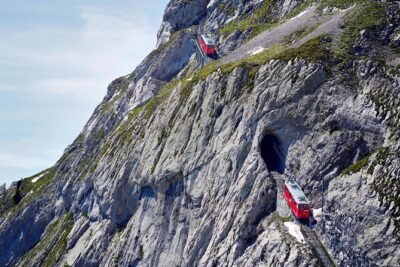
Mount Pilatus Summit from Lucerne With Lake Cruise
Read our review →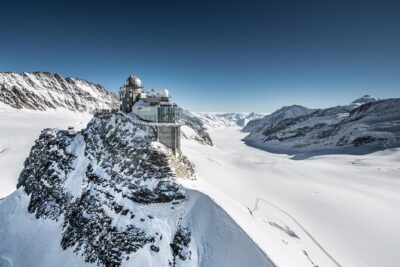
Jungfraujoch Top of Europe Day Trip from Lucerne
Read our review →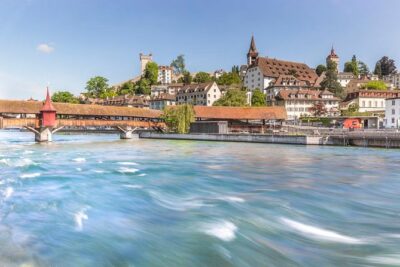
Lucerne Walking & Boat Tour: The Best Swiss Experience
Read our review →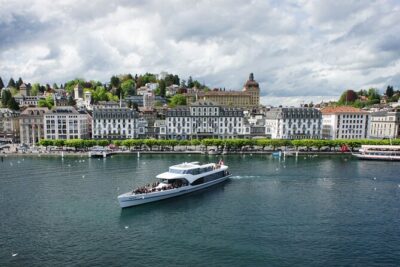
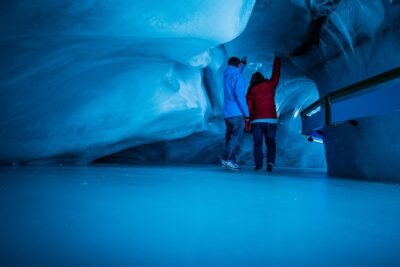
Mt Titlis Cable Car from Engelberg with Ice Flyer
Read our review →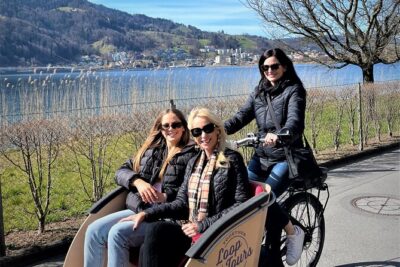
Lucerne’s Hidden Secrets by Electric Cargo Bike
Read our review →
Lucerne Swiss Museum of Transport Entrance Ticket
Read our review →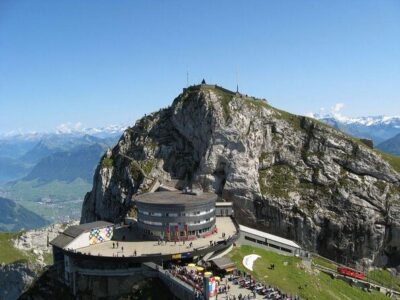
Mt Pilatus Peak and Lake Lucerne Cruise Small Group from Lucerne
Read our review →Browse the lists this tour appears in