
Reviewed · CITY TOURS
GENEVA EXCLUSIVE Complete Tour (PICK-UP), UN area & Old City
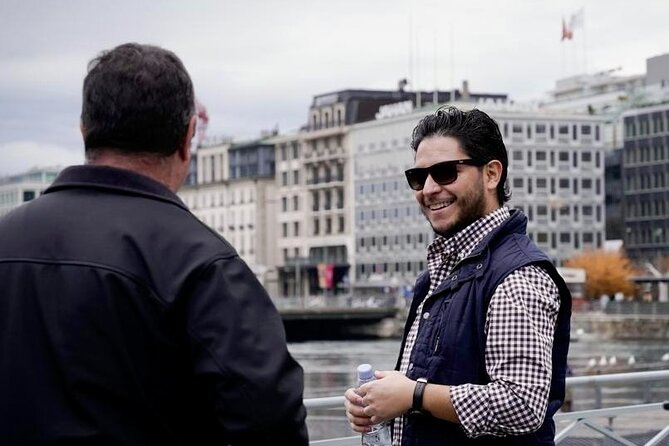
Geneva packs world affairs into a walkable city. This private half-day outing links the international quarter with the Old Town, giving you a useful first look at Geneva’s politics, faith, commerce, and lakefront in about three to four hours. I like the private car and flexible pacing, and I like the mix of major sights with small shopping stops for chocolate and Swiss-made souvenirs. The main drawback is the price: at $252.55 per person, it makes the most sense for a small group that values personal attention.
I also appreciate that the tour does not leave you to decode Geneva’s landmarks alone. Guides such as Augusto have been praised for clear English, strong knowledge of local history, and a warm manner with families, older couples, and children. You should expect roughly two hours on foot, comfortable shoes, and a tour that offers a broad introduction rather than long interior visits at every monument.
In This Review
- Key things to know before you book
- Why this tour works as a first look at Geneva
- Place des Nations and Geneva’s international identity
- The Broken Chair and the meaning behind it
- Chambesy viewpoint and the Red Cross connection
- From Wilson’s building to a Swiss chocolate break
- Victorinox, watches, and the practical souvenir question
- Place de Neuve and the edge of the Old Town
- The Reformation Wall and Geneva’s religious past
- Maison Tavel and the oldest part of Geneva
- Place du Molard, Saint-Pierre, and the lakefront
- What the $252.55 price gets you
- Who will enjoy this private Geneva tour?
- Should you book it?
- FAQ
- How long does the Geneva tour last?
- Is hotel pickup available?
- Where does the tour end?
- Is transportation included?
- Is the tour private?
- How much walking is involved?
- What language is offered?
Key things to know before you book
- A private BMW-style car ride connects Geneva’s far-flung districts, with air conditioning and bottled water included.
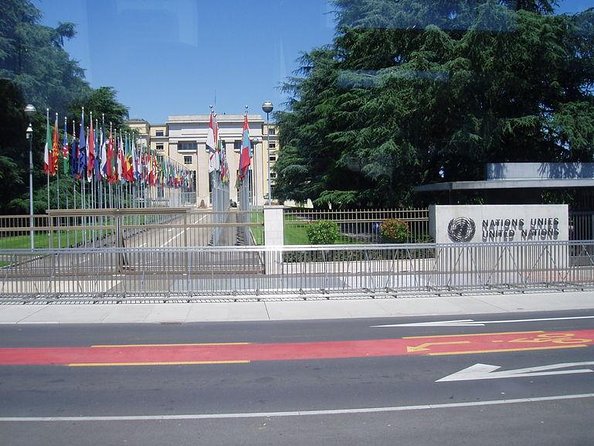
- The United Nations area comes first, including the Broken Chair and several major international institutions.
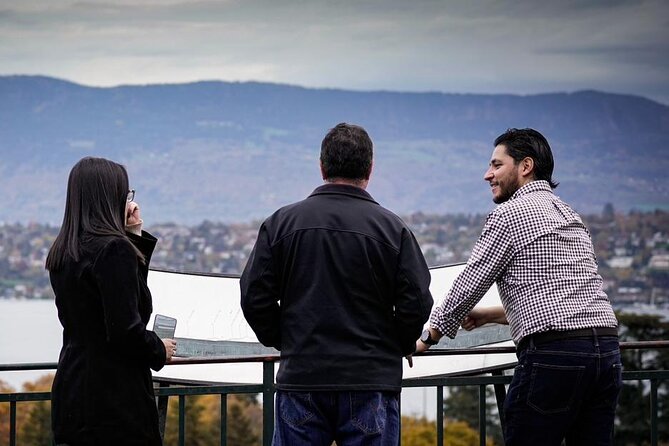
- Chambesy provides a short but worthwhile viewpoint, with Lake Geneva, the Alps, and Mont Blanc visible in suitable weather.
- The walking portion covers the Old Town and major central sights, including the Reformation Wall, Saint-Pierre Cathedral, and Place du Molard.
- Shopping stops are built into the route, with Swiss chocolate at Manor and custom Swiss Army knives at Victorinox.
- Hotel pickup is possible, although the stated meeting point is Place des Nations and the tour ends by the National Monument.
Why this tour works as a first look at Geneva
Geneva can feel like two cities joined together. One is a modern center for diplomacy, refugees, labor, health policy, and human rights. The other is a compact old city of churches, defensive walls, steep lanes, squares, and watch shops.
This tour gives you both sides in one morning or afternoon. That matters if you have only a short stay, if you are visiting Geneva before a wider Swiss trip, or if you want an orientation before exploring on your own.
The private format is the real selling point. You are not moving with a large group or waiting for strangers at every corner. Your guide can answer questions, adjust the pace, and spend more time on subjects that interest you. The supplied comments describe Augusto as especially good at adapting to families and individual interests. One family found him patient with a tired three-year-old, while another appreciated his suggestions for food and shopping.
The tour is offered in English. It includes private transportation in an air-conditioned vehicle, a guided walk, and bottled water. It does not include lunch or dinner, and you should bring an umbrella if rain is possible.
More things to do in Geneva:
- Award-Winning Geneva Chocolate &Old Town Tour with Boat Ride (3h)
★ 5.0 · 3,721 reviews - Chamonix & Mont Blanc Panoramic Sky-Glass Bus Guided Day Trip
★ 4.0 · 1,324 reviews - Annecy – Venice of the Alps – Tour from Geneva
★ 4.5 · 418 reviews
Place des Nations and Geneva’s international identity
The stated starting point is Place des Nations, though pickup from your accommodation can also be arranged. This is a practical beginning because Geneva’s international quarter sits away from the compact Old Town.
The first part introduces you to institutions that shape policy well beyond Switzerland. You pass the headquarters of the United Nations High Commissioner for Refugees, the agency that works with people displaced by persecution and conflict. You also see the International Labour Organization, founded in 1919 under the Treaty of Versailles to promote workers’ rights around the world.
The World Health Organization is another important stop along this stretch. Its first meeting took place in Geneva in 1948, and its work covers global health prevention, promotion, and intervention. These details help explain why Geneva attracts diplomats, aid groups, researchers, and international officials.
You also pass the headquarters of the former League of Nations, now the European headquarters of the United Nations. It became the League’s home in 1936 and later took on its current international role. The tour gives you the political setting without requiring a lengthy museum visit.
That is useful, but keep your expectations realistic. The route passes several institutions rather than promising entry into each one. If you want an inside look at the Palais des Nations or a formal UN visit, you would need to arrange that separately.
The Broken Chair and the meaning behind it
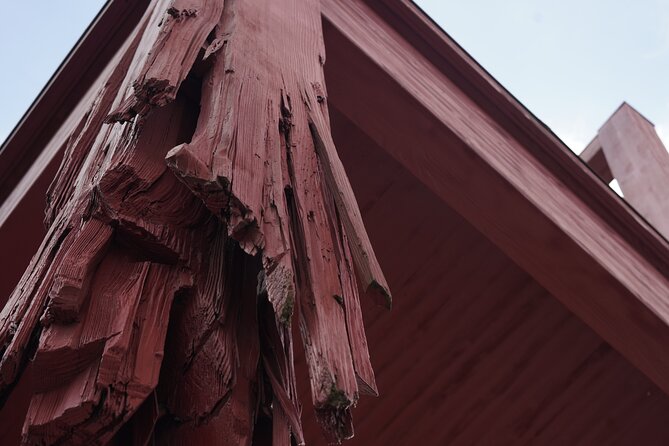
The first named stop is the Broken Chair at Place des Nations. You have about 10 minutes here, with no admission charge.
The wooden sculpture rises 12 meters high and represents Geneva’s commitment to peace and freedom. Its damaged leg honors people affected by anti-personnel mines. It is a striking public work, easy to photograph, and more meaningful once you know why it was made.
This brief stop also gives you a chance to take in the broad scale of Place des Nations. The square is not an old European plaza. It is a modern civic space shaped by diplomacy, protest, and international cooperation.
The short timing is enough for photos and an explanation. You will not spend a large part of the tour here, which is sensible given how much ground the rest of the route covers.
Chambesy viewpoint and the Red Cross connection
The vehicle then heads toward Chambesy, in the commune of Pregny-Chambesy. The stop lasts about five minutes, but the view can be one of the tour’s best moments.
From this high point, you can look toward Lake Geneva and the Alps, including Mont Blanc when conditions allow. The western shore setting offers a different view from the city center, where buildings and streets frame the lake more tightly.
Weather matters here. On a clear day, this is a fine place for photographs. On a cloudy or rainy day, the view may be limited, and the experience requires good weather overall. That condition is worth noting before you pay for a fixed date.
Along the route, you pass the International Red Cross and Red Crescent Museum. The Red Cross was founded in Geneva, and its work earned three Nobel Peace Prizes during the 20th century. Even without entering, the sight connects Geneva’s local identity to its global humanitarian role.
You also pass the Ariana Museum, formally the Ceramic and Glass Museum. Its collection contains nearly 20,000 objects from the last 1,200 years. The tour does not present this as a full museum visit, so you should treat it as an introduction and return later if decorative arts interest you.
More city tours in Geneva:
- Best of Geneva City Tour with optional boat cruise
★ 4.0 · 416 reviews - Geneva Scavenger Hunt and City Highlights Walking Activity
★ 4.5 · 14 reviews - Private Arrival Transfer: from Geneva Airport to Geneva City
★ 3.5 · 10 reviews - Chamonix Day Trip and Geneva City Tour
★ 4.5 · 6 reviews
From Wilson’s building to a Swiss chocolate break
Another notable building is the Wilson Palace, named for American president Woodrow Wilson. It was the League of Nations headquarters from 1920 until the organization moved to the Palais des Nations in 1936. Today, it houses the Office of the United Nations High Commissioner for Human Rights.
This part of the drive gives the tour a useful thread: Geneva’s international role did not begin with the modern United Nations. The city’s diplomatic importance grew through the League of Nations and continued through today’s human rights institutions.
The next named stop is Manor Geneva, the city’s largest flagship store. You have around 15 minutes for a refreshment break and a visit to the Swiss chocolate section.
I like this stop because it is practical rather than ceremonial. You can pause, buy a drink or snack, and see the kind of Swiss chocolate that makes an easy gift. Still, it is a retail stop, so shoppers may enjoy it more than those looking only for monuments.
From Manor, the tour continues on foot. This is an important transition. The car helps you cover distance, but the Old Town makes more sense at walking speed, where you can notice the lanes, walls, squares, and changes in elevation.
Victorinox, watches, and the practical souvenir question
At the Victorinox flagship store on Rue du Marché, you have about 20 minutes. The shop offers original Swiss Army knives, including customized versions, along with Swiss watches.
This is a good chance to buy a recognizable Swiss item while your guide helps explain the brand’s place in the country’s manufacturing tradition. A customized knife is more personal than a generic souvenir, though the tour does not include a purchase, discount, or product cost.
The Rue du Marché setting also puts you near Geneva’s luxury shopping streets and watch stores. This helps you see the range of Swiss commerce, from an affordable pocket tool to high-end timepieces.
Shopping can affect the pace. If you are traveling with people who prefer architecture to retail, agree in advance how much time you want to spend browsing. The private format makes that conversation easier than it would be in a large group.
Place de Neuve and the edge of the Old Town
Place de Neuve is a compact cultural crossroads. From here, you can see the Grand Théâtre opera house, the Geneva Conservatory of Music, the bust of Henry Dunant, and remnants of the old city wall.
Henry Dunant founded the Red Cross, so his presence brings the earlier international section back into the city center. The old wall shows how quickly Geneva’s character changes. A few steps can take you from modern shops and grand cultural buildings to the defensive edge of the historic city.
The tour allows about 10 minutes here. That is enough for an overview and photographs, not for a performance or an extended visit inside the opera house or conservatory.
You then enter the Parc des Bastions, one of the most pleasant walking stretches on the route. The park gives you room to pause before the denser Old Town streets.
The Reformation Wall and Geneva’s religious past
Inside the park is the International Monument of the Reformation, usually called the Reformation Wall. It measures about 99 meters long and 9 meters high, attached to part of the old 16th-century fortifications.
The monument honors Jean Calvin, Guillaume Farel, Théodore de Bèze, and John Knox, four major figures in the Protestant Reformation. Geneva’s religious identity shaped its laws, education, politics, and reputation across Europe, so this is not just a wall with statues. It is one of the key places for understanding why the city became so influential.
You have about 10 minutes here. A guide adds real value because the names and symbols can otherwise seem remote. Augusto has been praised for explaining both the religious and political sides of Geneva in a way that connects the past to the city you see today.
The walk continues to the Banc de la Treille, a green bench said to be 120 meters long and built in 1767. It is presented as the world’s largest bench and sits above the Parc des Bastions at the entrance to the Old Town.
The stop lasts about five minutes. Its appeal is simple: a curious local detail, an open view, and a good photo point. Geneva does not need every sight to be grand. Small oddities like this help make the walk feel like a real city visit rather than a parade of official monuments.
Maison Tavel and the oldest part of Geneva
The route passes Maison Tavel, the oldest private residence in Geneva that is still standing. The house was destroyed by fire in 1334 and rebuilt by the Tavel family, Geneva nobles who turned it into an urban palace.
The City of Geneva acquired the building in 1963 and restored it. Today, the six-floor museum covers the city’s growth and everyday life in earlier periods. Inside is the Relief Magnin, a large model of Geneva before the fortifications were demolished in 1850. It covers about 30 square meters.
The tour passes the building rather than scheduling an extended interior visit. That is a limitation if medieval architecture or city models are high on your list. Still, your guide can point out why the house matters, then you can return independently if your schedule permits.
This is where the guided format helps most. Old Town buildings can look attractive without revealing their purpose or age. A short explanation turns a pretty facade into part of Geneva’s story.
Place du Molard, Saint-Pierre, and the lakefront
Place du Molard brings you back to commercial Geneva. The Molard Tower dates to 1591, while the Halles building dates to 1690. Today, the square is surrounded by major retail brands and sits close to Rue du Rhône, known for luxury watches and design shops.
The stop lasts about five minutes. It is a quick look, but it shows how Geneva’s old center still functions as a shopping and meeting area rather than a preserved stage set.
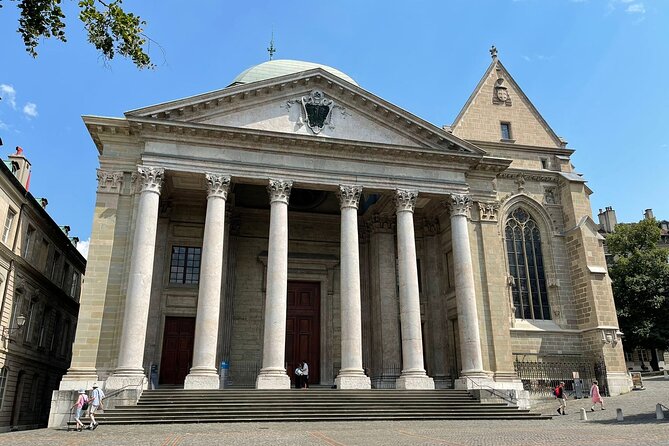
Saint-Pierre Cathedral receives about 15 minutes. It served as Geneva’s main Protestant church from 1535, after serving as the city’s cathedral for roughly a thousand years. The current structure was rebuilt between the 11th and 15th centuries, with an 18th-century portal.
This is one of the route’s most important historical stops. Saint-Pierre links Roman Catholic Geneva, the Reformation, and the city’s later Protestant identity. The cathedral has also been recognized for its importance to European cultural history.
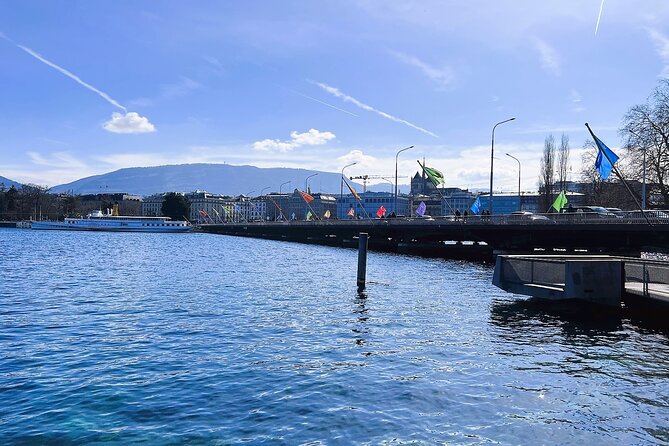
The tour then reaches the Flower Clock in the English Garden beside Lake Geneva. You have about five minutes for the familiar photograph. The floral design changes over time, and the clock’s appearance shifts with the seasons.
Finally, you visit the National Monument, which commemorates Geneva joining the Swiss Confederation after the restoration of the republic in 1814. Geneva and Helvetia appear as two warrior women embracing, each carrying symbols of war and national identity.
The stated ending point is the National Monument on the lakeside. From there, the central hotel area is nearby, and the operator can suggest places to eat or other points of interest.
What the $252.55 price gets you
At $252.55 per person, this is not a budget sightseeing ride. The value depends heavily on group size. For one or two people, the cost is substantial. For a family or small party sharing the private vehicle, the personal service and hotel pickup can make the price easier to justify.
You are paying for more than transport. The tour combines a driver-guide, a private car, bottled water, a guided walk, route planning, and explanations across a wide range of subjects. A standard group tour may cost less, but it may not offer the same pace or room for questions.
The strongest value comes when you have limited time. You can see the UN quarter, a mountain and lake viewpoint, shopping streets, the park, the Old Town, the cathedral, and the lakefront without working out several separate bus or taxi journeys.
The weaker value comes if you want long museum visits or detailed time inside each landmark. This is an overview, and it moves briskly. You should think of it as a well-organized introduction, not a replacement for exploring Geneva over several days.
Who will enjoy this private Geneva tour?
I would recommend it most to first-time visitors, families, older couples, and anyone with only a few hours in the city. The private setting also suits people who want to ask questions about politics, religion, geography, watches, chocolate, or local customs.
The feedback about Augusto is especially consistent on three points: he explains clearly in English, he adapts to the people in the car, and he takes pride in Geneva. Families valued his patience, while older couples appreciated his care with comfort and timing. He has also offered restaurant and shopping suggestions for the rest of a stay.
You should wear comfortable shoes. The walking section lasts about two hours, and the Old Town includes streets and park paths that are better handled in supportive footwear.
Most people can participate, and service animals are allowed. The tour is near public transportation, but pickup from your accommodation may be more convenient if that option is confirmed when you book.
Free cancellation is available up to 24 hours before the start time. Changes or cancellations inside that window are not accepted for a refund. Since the tour requires good weather and a minimum number of participants, a cancellation by the operator may result in another date, another experience, or a full refund.
Should you book it?
Book this tour if you want Geneva explained, not just photographed. You will see the city’s main symbols, cover ground comfortably, and get a useful sense of how the UN district, the Reformation, Swiss commerce, and the lakefront fit together.
I would skip it if your priority is independent wandering, long museum visits, or the lowest possible price. For everyone else, especially a small group with limited time, the combination of private transport and a personal guide makes this a strong Geneva introduction.
FAQ
How long does the Geneva tour last?
The tour lasts approximately three to four hours.
Is hotel pickup available?
Yes. The stated meeting point is Place des Nations, but pickup from your accommodation is also possible.
Where does the tour end?
The tour ends at the National Monument on Promenade du Lac. This is near Geneva’s central area and hotel district.
Is transportation included?
Yes. Private transportation in an air-conditioned vehicle is included, along with bottled water.
Is the tour private?
Yes. Only your group participates in the private tour or activity.
How much walking is involved?
You should expect approximately two hours of walking. Comfortable shoes are recommended.
What language is offered?
The tour is offered in English.
Just added in Geneva
- Geneva Highlights Tour by TaxiBike★ 5.0 · 6 reviews
- Swiss Vineyard Wine Tasting Tour in Vaud★ 5.0 · 5 reviews
- Private Trip from Geneva to Annecy in France★ 5.0 · 7 reviews
- Six Hour Private Tour of The Swiss Riviera★ 5.0 · 11 reviews
- Old Town Geneva Private Walking Tour★ 4.5 · 4 reviews
- Private Arrival Transfer: from Geneva Airport to Gstaad Saanen★ 5.0 · 2 reviews
- Private Trip from Geneva to Swiss Riviera Montreux & Chamonix★ 3.5 · 6 reviews
- Private Arrival Transfer: from Geneva Airport to Evian-les-Bains, France★ 5.0 · 1 review
City Tours, compared.
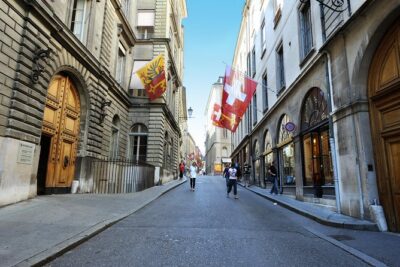
Best of Geneva City Tour with optional boat cruise
Read our review →
City tour Zurich with the city whispers from CHF 21.00
Read our review →
Best of Zurich and Surroundings – Extended City Sightseeing Tour
Read our review →
Private Arrival Transfer: from Zurich Airport to Zurich City
Read our review →
Browse the lists this tour appears in