
Reviewed · WALKING TOURS
Geneva Private Walking Tour with a Professional Guide
Geneva reveals itself on foot. This private two-hour tour gives you a focused look at the Old Town, from the flower clock and lakefront area to Saint Peter’s Cathedral, the Reformation Wall, and Place de Neuve. I especially like the private format, which keeps the pace personal, and the chance to ask your guide about Calvin, Geneva’s politics, architecture, or daily life without holding up a large group.
The route also makes smart use of limited time. I like that it links major sights in one clear walk, which is useful if you have less than a day in Geneva. The main consideration is cost: $421.03 per group of up to 15 is a fair deal for a full group, but expensive for one or two people. The tour lasts about two hours, and entrance fees and gratuities are extra.
In This Review
- Key Points to Know Before You Book
- Starting Beside Geneva’s Famous Flower Clock
- Saint Peter’s Cathedral and Calvin’s Geneva
- City Hall and the Working Side of Geneva
- Place du Bourg-de-Four, Geneva’s Old Meeting Place
- The Reformation Wall in Bastions Park
- Ending at Place de Neuve’s Cultural Triangle
- What the Private Format Adds
- Timing, Walking, and What to Bring
- Who Will Get the Most From This Walk
- My Take on the Geneva Walking Tour
- Should You Book This Tour?
- FAQ
- How long does the Geneva private walking tour last?
- Where does the tour begin?
- Where does the tour end?
- How many people can join the private tour?
- Is the tour offered in English?
- Are entrance fees and gratuities included?
Key Points to Know Before You Book
- The walk begins at the Flower Clock: You meet at L’Horloge Fleurie on Quai du Général-Guisan, an easy-to-find starting point near the lake.
- The focus is Geneva’s Old Town: The route covers Saint Peter’s Cathedral, City Hall, Place du Bourg-de-Four, the Bastions Park, and Place de Neuve.
- The private guide can adjust the emphasis: On-the-spot customization is possible, so you can ask for more history, photography stops, cultural context, or modern Geneva.
- Calvin and the Reformation shape the story: The tour explains how 16th-century Protestantism affected Geneva’s buildings, politics, and local character.
- The group limit affects the value: Up to 15 people can join for the same group price, making this much better value for families and larger parties.
- The tour ends near major cultural sights: Place de Neuve puts you by the Grand Theatre, Conservatoire de Musique, and Musée Rath.
Starting Beside Geneva’s Famous Flower Clock
The meeting point is L’Horloge Fleurie, Geneva’s celebrated flower clock on Quai du Général-Guisan. It is a practical place to begin because the area is near public transportation and close to the lakefront. You receive confirmation at booking, and the mobile ticket makes it easy to keep the details on your phone.
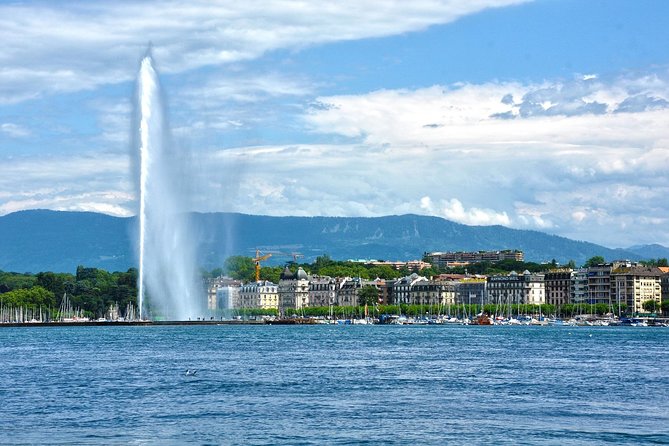
The flower clock is more than a quick photo stop. It reflects Geneva’s long connection with watchmaking, while the surrounding English Garden gives the opening minutes some breathing room. You also see a sculpted bronze water fountain before leaving the waterfront and heading uphill.
I like this beginning because it lets you start with one of Geneva’s most recognizable sights before moving into older, less polished streets. The change in setting is part of the pleasure. You go from an open lakeside area to stairways, stone buildings, churches, and narrow passages in the historic center.
The uphill section matters. The itinerary includes a long stairway passage leading toward Saint Peter’s Cathedral, so you should expect real walking rather than a flat promenade. The route is not presented as difficult, and most people can participate, but comfortable shoes are sensible. In warm weather, the pace and access to shade may matter, especially for families or older members of your group.
More Walking Tours in Geneva
- Geneva Private Custom Walking Tour With A Guide (Private Tour)
★ 4.5 · 47 reviews - Geneva Scavenger Hunt and City Highlights Walking Activity
★ 4.5 · 14 reviews - Geneva Private Walking Tour with a Local
★ 4.5 · 13 reviews
Saint Peter’s Cathedral and Calvin’s Geneva
Saint Peter’s Cathedral is the tour’s main historical anchor. The building occupies the site of an ancient Roman temple from the 4th century and became the starting point of Calvinist Protestantism in Geneva during the 16th century.
The cathedral’s architecture reflects its long development. It began in a Romanesque style with Gothic influence, then changed over time. Today, you see a mix of styles rather than one perfectly uniform design. That gives your guide a useful opening to explain how buildings change as cities change.
The key value here is not only the church itself. It is the link between the cathedral and Geneva’s wider identity. John Calvin’s influence reaches into the city’s religious past, civic life, and ideas about government. One especially strong part of the tour is the explanation of how the Protestant Church in Geneva affected Switzerland and how democratic government developed among the diverse cantons.
If you are interested in European religious history, this section will likely hold your attention. The historical focus is clear without requiring you to know the details beforehand. If churches are not your main interest, you can ask the guide to spend more time on architecture, city life, or photography.
Entrance fees are not included. That point is important because the tour description refers to visiting the cathedral, but you should not assume that any paid interior access is covered by the tour price. Ask your guide what can be seen as part of the walk and what requires an additional ticket.
City Hall and the Working Side of Geneva
From the cathedral, the route continues to Geneva’s City Hall. This is not simply a handsome civic building placed on a sightseeing route. Its cobblestone ramp and old cannons help connect the city’s political story with its physical setting.
The cannons date from the 16th and 17th centuries. The building has also witnessed major diplomatic events, giving your guide a chance to move beyond church history and explain Geneva as a place of negotiation and public affairs.
The cobblestone ramp is a small but useful detail for planning. It adds character, though it may be less comfortable for anyone with limited mobility. The tour information says most people can participate, but it does not promise full step-free access. If someone in your group has mobility concerns, contact the provider before booking and ask about the stairway and cobblestone sections.
This is also where a private guide can make a real difference. You can ask how Geneva’s religious past affected its government, or how the city functions today. A large group walk often gives you a fixed script. Here, you have room to follow your own questions.
Place du Bourg-de-Four, Geneva’s Old Meeting Place
Place du Bourg-de-Four is one of the most atmospheric stops on the route. It began as a Roman Forum and later became a medieval town square. That long change gives the guide a compact way to explain how Geneva grew from an ancient settlement into a medieval and modern city.
The Palais de Justice is located here. Built in 1707, it has served as a court of law only since 1860. That detail is a good reminder that buildings often outlive their original purpose. The square is not only a picture stop. It is a place where Roman, medieval, and later civic layers sit close together.
I would pay attention here to the scale of the Old Town. Geneva is known around the world for diplomacy, finance, international organizations, and the lake, but this square helps you see its older local face. The private format gives you time to notice the small changes in stonework, street layout, and building use that are easy to miss when you rush between major landmarks.
The route then heads downhill toward Bastions Park. After the earlier climb, this direction should feel easier, though the total walk still includes stairs and uneven historic surfaces.
A completely different kind of day:
- Award-Winning Geneva Chocolate &Old Town Tour with Boat Ride (3h)
★ 5.0 · 3,721 reviews - Chamonix & Mont Blanc Panoramic Sky-Glass Bus Guided Day Trip
★ 4.0 · 1,324 reviews - Annecy – Venice of the Alps – Tour from Geneva
★ 4.5 · 418 reviews - Best of Geneva City Tour with optional boat cruise
★ 4.0 · 416 reviews
The Reformation Wall in Bastions Park
Bastions Park contains Geneva’s Reformation Wall, a 91-meter memorial built in 1917 along a 16th-century rampart beneath the Old Town walls. This is the clearest place on the walk for understanding how Geneva presents its Protestant past.
The monument represents four major Genevese reformers: John Knox, John Calvin, Théodore de Bèze, and Guillaume Farel. Their names and roles can blur together if you only read a plaque, so this is exactly the kind of stop where a local guide helps. You can ask who each person was, what role Geneva played, and why the Reformation mattered far beyond the city.
The wall also gives the tour a physical sense of scale. You are not just hearing about a movement in an old church. You are looking at a long public memorial built against a former defensive wall. Religion, politics, urban design, and memory all meet in one place.
This section received the strongest praise from people interested in history, especially the discussion of Calvinism and the way it shaped Geneva. If that is your main reason for booking, tell the guide at the start. The itinerary already centers on this subject, and the private setting should make it easier to adjust the detail level.
If your interests are more visual than historical, Bastions Park still works well. One guide, Olga, was especially praised for combining history with scenic and photographic stops. You can ask for time to frame the memorial, surrounding park, or Old Town views instead of treating the monument as a quick stop.
Ending at Place de Neuve’s Cultural Triangle
The walk ends at Place de Neuve, often described as Geneva’s cultural heart. Three important institutions face this area: the Grand Theatre, the Conservatoire de Musique, and the Musée Rath.
The Grand Theatre was built in 1879 and renovated after a fire in 1951. That simple timeline tells another Geneva story, one based on public culture rather than religion or government. The Conservatoire de Musique adds a musical note, while the Musée Rath gives the square an art connection.
This is a useful ending because you finish near places you may want to explore later. The tour does not include entrance fees, so you would need to arrange any interior visits separately. Still, the guide can help you understand what you are seeing and may be able to suggest how to continue your day.
One practical advantage is the flexible end point. The tour information gives Geneva as the final location rather than a precise return to the starting point. A guide named Olga once walked a group directly to a restaurant reservation after the tour. That does not guarantee the same service for every booking, but it shows why you should mention your next plan in advance or ask during the walk.
What the Private Format Adds
The tour is for your group only, with a maximum of 15 people. That changes the experience in several useful ways. You can stop to ask why Geneva became a center of Protestant thought, request a better angle for a photograph, or ask about shopping and modern city life.
The guide can also read the group. Olga was praised for balancing history, photography, lakefront views, cultural details, the Geneva fountain, the flower clock, and shopping destinations. Darria handled a family group with different ages during very warm weather, keeping the mood friendly and adding playful humor.
Those details matter because a private tour succeeds or fails on the guide’s ability to adjust. Natalia received strong praise for making the streets, churches, and buildings accessible to people interested in the city’s past. The Spanish-language feedback also described an entertaining account of Geneva across the centuries.
The trade-off is price. At $421.03 for up to 15 people, the per-person cost is about $28 for a group of 15, before gratuities and any entrance fees. For two people, it is about $211 each. For a family or reunion group, that can be reasonable. For a couple, a regular group tour or self-guided walk may offer better savings if available.
The price also buys time efficiency. The route covers several major districts and landmarks in two hours, with a guide connecting them rather than leaving you to piece the story together. If you have less than 24 hours in Geneva, that can be worth more than a lower-cost tour that takes longer or covers less.
Timing, Walking, and What to Bring
Plan for about two hours of walking. The route includes a long stairway passage, historic streets, a cobblestone ramp, and a downhill section toward Bastions Park. Comfortable shoes are the basic requirement.
Warm weather can affect the experience. One guide successfully handled a hot day with a mixed-age family group, but you should still bring water and consider the time of day when booking. The tour begins near the lake, moves uphill, and later reaches the open park area, so conditions may feel different as you walk.
A mobile ticket is included, which keeps the booking simple. The tour is offered in English, and the guide is with your group only. Most people can participate, and the route is near public transportation, but the available details do not promise wheelchair access or a fully step-free path.
Free cancellation is available if you cancel at least 24 hours before the start time. Changes or cancellations made within 24 hours are not accepted for a refund. Since the cut-off uses Geneva local time, check the exact start time before making changes.
Who Will Get the Most From This Walk
I would recommend this tour to first-time visitors who want a clear introduction to Geneva without spending half a day on a bus. It also fits families, small groups, history fans, photographers, and anyone who wants to shape the tour around personal interests.
It is particularly good for people curious about Calvin and the Reformation. The route does not treat Geneva as just a pretty lake city. It explains how religious ideas affected local life and how the city’s political traditions developed.
Families may appreciate the private setting because the guide can adjust the pace and tone. Darria’s experience with a wide range of ages suggests that the format can work well when not everyone in the group wants the same level of detail.
I would be more cautious if you dislike walking, stairs, or historic paving. I would also compare the price carefully if only one or two people are booking. The tour has its best value when the group price is shared among several people.
My Take on the Geneva Walking Tour
This is a focused, history-led introduction to central Geneva. The route is well chosen: it begins with the flower clock, climbs to Saint Peter’s Cathedral, passes the City Hall and Place du Bourg-de-Four, explains the Reformation Wall, and ends among the city’s major cultural institutions.
The most praised qualities are the guides’ warmth, flexibility, and ability to suit different interests. Olga’s mix of photography, modern Geneva, and historical detail is useful for a varied group. Natalia’s explanation of Calvinism should please history fans. Darria’s friendly approach is a plus for families.
The main weakness is not the route but the pricing and limits of a two-hour walk. You will get an overview, not an exhaustive study of Geneva. You also pay entrance fees separately, and the exact interior access at the cathedral is not spelled out.
Should You Book This Tour?
Book it if you want a private, efficient introduction to Geneva and have a group large enough to share the $421.03 fee. It is especially useful when your time is short, your group has mixed interests, or you want to ask questions about Calvin, photography, food, shopping, or modern city life.
For one or two people on a tight budget, compare the cost with a group walk or self-guided route. If you do book, tell the guide what matters most before the tour begins, wear good shoes, and ask about any cathedral entrance fee. Those small steps will help you get the most from two hours in Geneva.
FAQ
How long does the Geneva private walking tour last?
The tour lasts approximately two hours.
Where does the tour begin?
It begins at L’Horloge Fleurie, the Flower Clock, at Quai du Général-Guisan 28, 1204 Genève, Switzerland.
Where does the tour end?
The tour ends in Geneva at a central meeting point near Place de Neuve and the Old Town route.
How many people can join the private tour?
The price covers one private group of up to 15 people. Only your group participates.
Is the tour offered in English?
Yes. The tour is offered in English.
Are entrance fees and gratuities included?
No. Entrance fees and gratuities are not included in the tour price.
Just added in Geneva
- Geneva Highlights Tour by TaxiBike★ 5.0 · 6 reviews
- Swiss Vineyard Wine Tasting Tour in Vaud★ 5.0 · 5 reviews
- Six Hour Private Tour of The Swiss Riviera★ 5.0 · 11 reviews
- Old Town Geneva Private Walking Tour★ 4.5 · 4 reviews
- Private Trip from Geneva to Annecy in France★ 5.0 · 7 reviews
- Private Arrival Transfer: from Geneva Airport to Gstaad Saanen★ 5.0 · 2 reviews
- Private Trip from Geneva to Swiss Riviera Montreux & Chamonix★ 3.5 · 6 reviews
- Private Arrival Transfer: from Geneva Airport to Evian-les-Bains, France★ 5.0 · 1 review
Walking Tours, compared.
Zurich Walking Tour With Cruise and Aerial Cable Car
Read our review →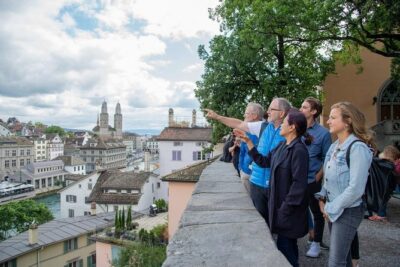
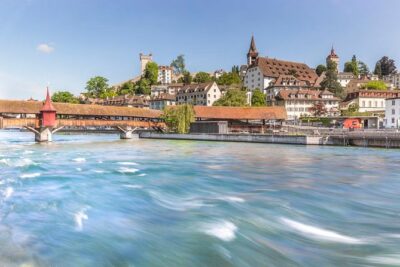
Lucerne Walking & Boat Tour: The Best Swiss Experience
Read our review →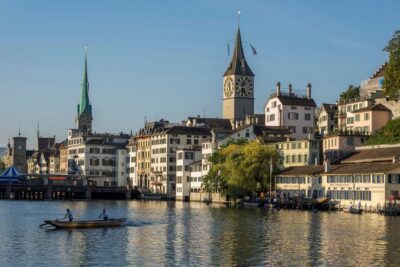
3 in 1: Zurich Walking Tour – Cruise on the Lake – Cable Car Ride to Felsenegg
Read our review →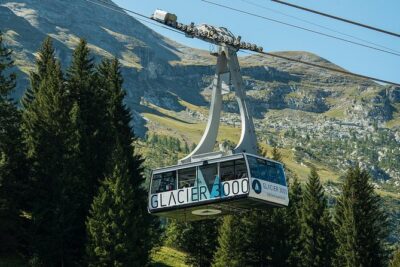
Glacier 3000 Ticket Including Cable Car and Peak Walk by Tissot
Read our review →
Zurich Private Customizable Guided Walking Tour
Read our review →
Bern Walking Tour: Explore Top Sights & Hidden Gems
Read our review →Browse the lists this tour appears in