
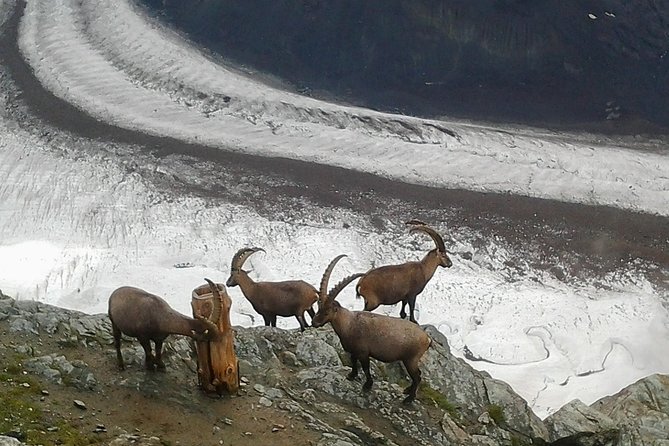
Reviewed · MATTERHORN TOURS
Zermatt & Mt. Gornergrat Small Group Day Trip from Bern
Matterhorn views are worth the long train ride. This full-day trip from Bern gives you a smart way to reach Zermatt and high Gornergrat without sorting out several Swiss rail connections yourself. I like the small group of no more than 15 people and the fact that round-trip transport, the Matterhorn railway, and entrance fees are covered. I also like the mix of village time, mountain scenery, and useful Swiss history.
The main tradeoff is time. You spend much of the roughly nine-hour day on trains, and only about two hours exploring Zermatt before heading up Gornergrat. Cloud can also hide the Matterhorn, even when the rest of the Alps look superb. Guides such as Jackie, Amil, Domenico, Enzo, Remi, Anna, and Faseel have earned strong praise for making the connections easy and the day personal.
In This Review
- Key points at a glance
- Why this Bern to Zermatt trip makes sense
- The first train from Bern to Visp
- Riding through the Mattertal to Zermatt
- Zermatt’s old wooden village
- The Kirchbrücke view and the Matterhorn picture
- The mountaineers’ cemetery and Monte Rosa Hotel
- The Gornergrat railway climbs above the valley
- What you see at 3,135 meters
- How the guide changes the day
- The small-group format and daily pace
- Weather, clothing, and photo planning
- Returning to Bern after the mountain visit
- Who should book this experience?
- Should you book the Zermatt and Gornergrat day trip?
- FAQ
- Where does the tour start?
- What time does the tour begin?
- Where does the tour end?
- How long does the tour last?
- How do you travel from Bern to Zermatt?
- Is the Gornergrat railway included?
- How much time do you spend in Zermatt?
- What is the maximum group size?
- What happens if the weather is poor?
Key points at a glance
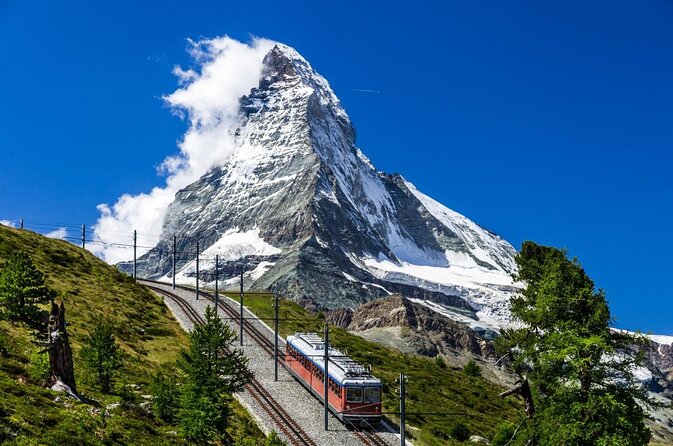
- Two scenic rail journeys in one day: Travel from Bern to Visp, then ride the Matterhorn-Gotthard Railway into Zermatt.
- Gornergrat reaches 3,135 meters: The cogwheel railway climbs to a snow-covered ridge with views of the Matterhorn, Monte Rosa, Liskamm, glaciers, and many high Alpine peaks.
- Zermatt gets a focused walking tour: See old wooden houses, the Kirchbrücke viewpoint, the mountaineers’ cemetery, and the Monte Rosa Hotel.
- Small-group attention matters: The group is capped at 15, and some departures have been private when demand was low.
- The guide handles the rail puzzle: Transport fees and a priority boarding pass for the Matterhorn railway are included.
- Weather shapes the day: A clear summit is unforgettable, but clouds can cover the Matterhorn and may lead to a rescheduled or refunded trip.
Why this Bern to Zermatt trip makes sense
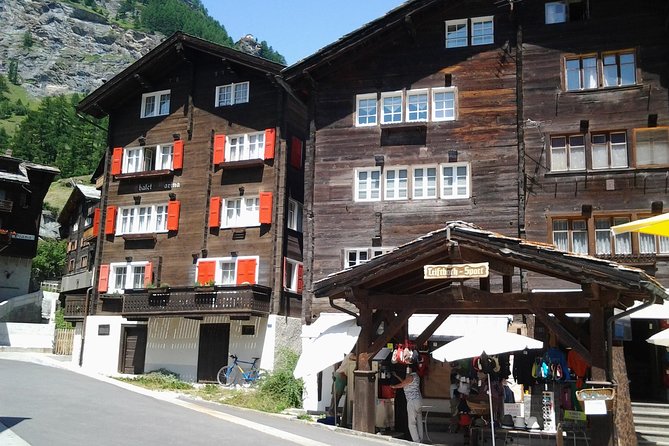
Zermatt is one of Switzerland’s famous Alpine villages, but reaching it from Bern takes planning. You need to coordinate an intercity train, a connection at Visp, the rail journey into Zermatt, and the Gornergrat cogwheel train. On your own, the route is possible, but a missed connection or unclear platform can eat into your short visit.
This tour removes much of that mental work. You meet at the Tourist Information office at Bern railway station at 8:45 am, then travel with a local guide who stays with you through the rail changes and mountain visits. The guide’s value is not just commentary. It is knowing where to go, when to move, and how to keep a small group together.
The price is $754.48 per person, so this is not a cheap day out. I would judge it as a convenience purchase rather than a budget rail excursion. Your fare covers all transport, the Gornergrat railway, taxes, handling charges, and entrance fees. Food, drinks, your journey to Bern, personal purchases, and gratuities are extra.
That price makes the most sense for you if your Swiss trip is short and Zermatt is high on your list. You are paying for a full day, a guide, rail coordination, and access to one of Switzerland’s most famous mountain viewpoints. If you are comfortable booking Swiss trains yourself and want more free time, an independent visit may offer better control.
More Matterhorn trips:
- Zermatt Village & Matterhorn Glacier Tour | From Bern
★ 5.0 · 8 reviews - Bern Private Tour – Zermatt Village and Gornergrat’s Railway
★ 5.0 · 3 reviews - Matterhorn Paragliding flight in Zermatt (20-25min)
★ 5.0 · 207 reviews
The first train from Bern to Visp
The day begins with an intercity train from Bern to Visp. The ride takes about 50 minutes, and it is a useful introduction to how much ground Swiss trains cover quickly. The route passes near Lake Thun, a long fjord-like lake at the northern edge of the Alps and one of the notable sights in the Bernese Oberland.
The train then passes through the Lötschberg Base Tunnel. At 34.6 kilometers, it cuts beneath the northern Alpine chain between Frutigen and Raron. The tunnel opened in 2007 and forms part of the rail route linking northern Switzerland with the Valais and onward toward Italy.
You will not see Alpine scenery while inside the tunnel, of course, but the route explains why Swiss rail travel is so efficient. Mountains that once made travel slow and difficult are crossed under the rock rather than climbed over it. The guide can give the journey context, which is especially useful if railway engineering and Swiss geography are not your strong points.
At Visp, you leave the intercity train and change to the Matterhorn-Gotthard Railway. The connection is direct, and the next ride takes about 55 minutes to reach Zermatt.
Riding through the Mattertal to Zermatt
The train follows the Mattertal, a dramatic side valley of the Rhône Valley in Valais. The valley reaches south toward the main Alpine ridge and the Swiss-Italian border. Several of the Alps’ highest mountain groups sit around this area, so the ride becomes part of the sightseeing rather than mere transport.
This change from mainline railway to mountain railway is one of the pleasures of the trip. The pace slows, the valley closes in, and the scenery begins to feel more alpine. You are heading into a place where the mountains are not distant backdrops. They surround the settlement and control the shape of daily life.
The drawback is that the rail schedule limits your freedom. You are following the group’s timetable, not choosing to linger at a favorite viewpoint. Still, the guide makes the change at Visp much easier, especially for anyone unfamiliar with Swiss rail stations.
Zermatt’s old wooden village
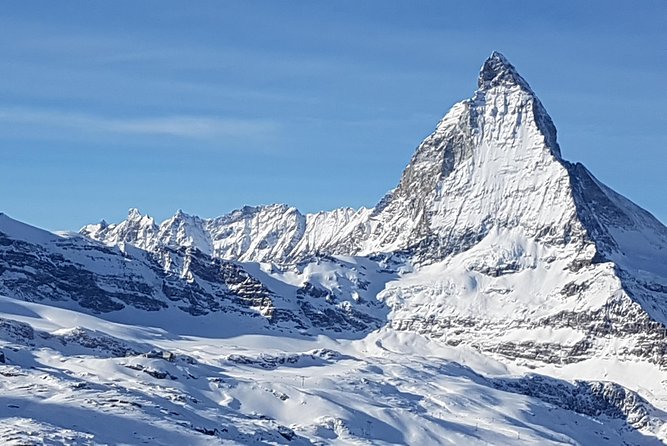
You have about two hours in Zermatt, beginning with a walk through the old part of the village. Traditional wooden houses give this section a more local feel than the modern parts of the resort. The buildings reflect the mountain village that existed before Zermatt became a major international destination.
I like this part of the tour because it gives you a human scale before the big mountain views. Gornergrat is grand and impressive, but the old houses, narrow streets, and village details help explain what Zermatt actually is. You are not simply being taken to a photo stop. You get a short look at the settlement beneath the tourist reputation.
The two hours also include stops at the Kirchbrücke bridge, the mountaineers’ cemetery, and the Monte Rosa Hotel. You should expect a guided orientation rather than a long, unstructured shopping break. If you want boutiques, cafés, or a slow lunch in Zermatt, the schedule may feel tight.
More things to do in Bern:
- Bern Walking Tour: Explore Top Sights & Hidden Gems
★ 5.0 · 108 reviews - Bern Private Walking Tour with a Local
★ 4.5 · 75 reviews - Chocolate tour in Bern with chocolate tasting
★ 4.5 · 34 reviews - Bern : Private Walking Tour with a Local Guide (Private tour)
★ 4.5 · 20 reviews
The Kirchbrücke view and the Matterhorn picture
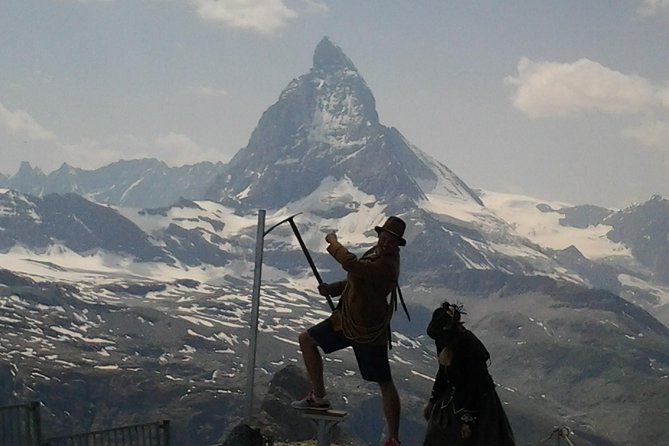
The Kirchbrücke bridge provides the classic Zermatt village view toward the Matterhorn. The stop lasts about 10 minutes, so have your camera ready before you reach the viewpoint.
This is a practical stop, not a long walk. The bridge is a good place to understand the visual relationship between the village and the mountain. Zermatt’s wooden buildings make the foreground, while the Matterhorn rises beyond them when the weather cooperates.
Cloud is the great variable here. One departure had the mountain covered for much of the day, then the summit cleared during lunch, producing excellent photographs. Another day began with clear views near the mountain before clouds moved in. The lesson is simple: take photos when you have the chance, and do not assume the view will remain open.
The mountaineers’ cemetery and Monte Rosa Hotel
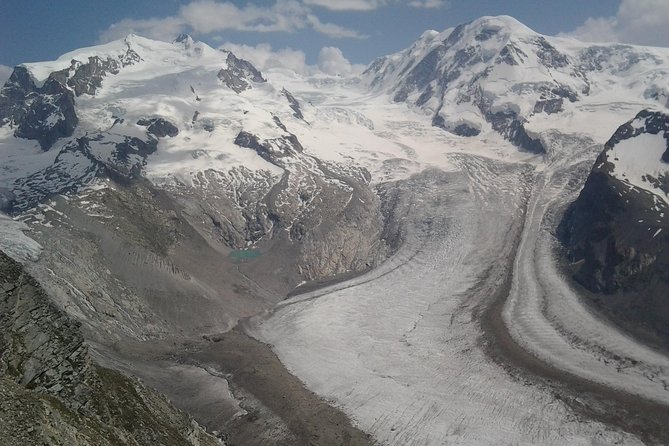
The mountaineers’ cemetery is a small but serious part of the visit. It recalls the dangers of climbing the Matterhorn and the surrounding high peaks. The graves show that Alpine success came with real risk, not just postcard scenery.
This stop adds needed balance to a mountain day. It is easy to treat the Matterhorn as a scenic object, but the cemetery connects it to the people who attempted difficult climbs and sometimes did not return. You may find the visit sobering, though it is handled as part of Zermatt’s story rather than as a sensational attraction.
The Monte Rosa Hotel is linked to the first ascent of the Matterhorn. The first successful climb began here, and information about that ascent and its tragic aftermath is available at the hotel. Your guide can help place the event within Zermatt’s mountaineering past.
Together, these two stops make the morning in Zermatt more meaningful. You see the village, then the risks behind the mountain’s fame.
The Gornergrat railway climbs above the valley
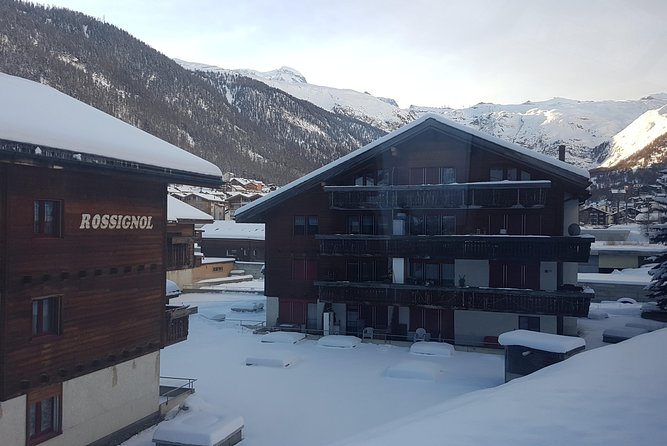
From Zermatt, you board the Gornergrat cogwheel railway for a climb of about 30 minutes. The line rises nearly 1,500 meters from Zermatt, which sits at about 1,620 meters, to the high ridge near 3,135 meters.
The train itself is a major part of the experience. You move from a settled Alpine village into a high zone where snow can remain throughout the year. The railway makes this altitude accessible without a strenuous hike, which is one reason the trip suits people who want major mountain views without a demanding physical outing.
A priority boarding pass for the Matterhorn railway is included. That does not turn the ride into a private carriage, but it helps the group manage this important part of the schedule. When the day is short, every organized boarding detail matters.
At the top, allow time for the scenery to work its magic. Gornergrat sits between the Gorner Glacier and the Findel Glacier, with views toward more than 20 peaks above 4,000 meters. The Matterhorn, Monte Rosa, and Liskamm are among the major summits visible in good conditions.
What you see at 3,135 meters
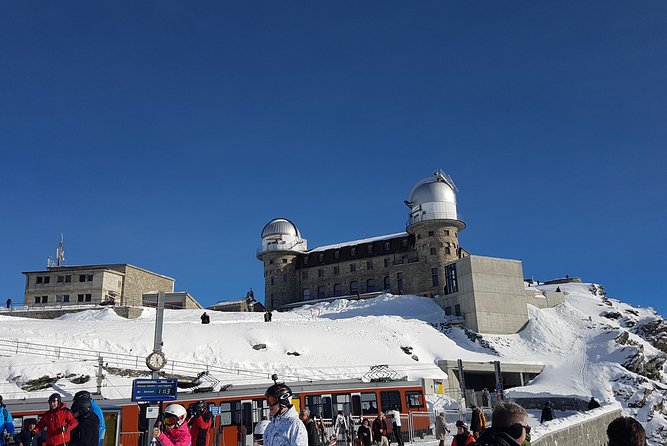
Gornergrat is a ridge rather than a single narrow lookout. You can walk to scenic viewpoints and look over glaciers and high peaks. Snow is present year-round in this area, though the exact view depends on clouds and visibility.
The altitude is the point, but it is also something to respect. You go from Bern to high Alpine terrain in one day, with no gradual multi-day adjustment. The tour data does not promise how you will feel at altitude, so take the stop at your own pace and bring layers. One traveler specifically advised dressing for changing conditions, and that is sensible advice for a high mountain railway visit.
There is also a multimedia experience world at Gornergrat. It presents the Matterhorn and the surrounding Alpine world in a format that can hold your attention when weather blocks the outdoor views. This is a useful backup, particularly because the tour requires suitable weather and the mountain can disappear behind clouds without warning.
The mountain station area includes the Kulmhotel, described as Switzerland’s highest mountain hotel. You are not booking an overnight stay as part of this tour, but the hotel adds a sense of place to the summit visit.
How the guide changes the day
The guide is the strongest part of this experience. The rail route has several moving pieces, and a guide who understands the Swiss system keeps you from spending your day staring at departure boards.
Remi received particular praise for his train background and for making the connections easy. That matters on a day that uses both the main Swiss rail network and the Matterhorn-Gotthard Railway. Domenico was described as professional and well informed about Swiss history. Enzo was praised for making the day friendly and entertaining while explaining the Alps, glaciers, and local culture.
Jackie was singled out for her personality and useful information. Amil led a departure that became a private experience when no other participants joined. Faseel was praised so warmly that one person wished they could hire him for every future vacation. Anna was noted for making the small group feel personal while explaining Swiss culture.
Guides can vary by departure, so you should not book expecting one particular person unless the operator confirms that in advance. The consistent theme is personal attention, rail help, and local explanation rather than a rushed procession from one photo stop to the next.
The small-group format and daily pace
The maximum group size is 15. That is small enough for a guide to keep track of everyone during train changes and walking stops, while still being larger than a private tour.
Some departures may be much smaller. One experience was effectively private, and that allowed the guide to adapt the day more freely. You should not count on that, but a group cap of 15 is still a useful middle ground between a private tour and a large coach excursion.
The pace is active but not strenuous according to the available participation information. Most people can take part, and service animals are allowed. The demanding part is not a long hike. It is the length of the day, the train changes, and the high-altitude stop at Gornergrat.
The biggest scheduling issue is Zermatt itself. You have about two hours for the village walk and its historical stops, then about two hours at Gornergrat. If your dream is to shop, sit in a café, or explore side streets at leisure, you may wish for more village time. If your priority is seeing the Matterhorn from above, the allocation makes sense.
Weather, clothing, and photo planning
The Matterhorn is not guaranteed to appear. Several conditions are possible: a completely clear summit, clouds that come and go, or a mountain hidden for much of the day. One cloudy day still delivered beautiful Alpine views, and the summit opened briefly during lunch.
Bring layers. The weather at Gornergrat can differ sharply from conditions in Bern or Zermatt, and the mountain remains snowy all year. Comfortable shoes are also sensible for walking around the village and viewpoints, although the supplied information does not describe a strenuous hike.
Keep your camera ready at the Kirchbrücke viewpoint and again when you reach Gornergrat. The guide may help you make the most of short clear periods, but no one can control the clouds. The best attitude is to value the whole route, not just one perfect Matterhorn photograph.
If poor weather cancels the experience, you are offered another date or a full refund. The same applies if the minimum number of participants is not reached. For a normal cancellation, you can receive a full refund if you cancel at least 24 hours before the 8:45 am start.
Returning to Bern after the mountain visit
After Gornergrat, you return to Zermatt and retrace the rail route through the Mattertal to Visp, then continue toward Bern. The return journey takes about two hours according to the schedule, though the entire experience is listed at approximately nine hours.
By this point, you may be tired. That is the cost of seeing Zermatt from Bern in a single day. Still, the train ride gives you time to rest, look back over the day, and watch the scenery change from high mountains to the lower valleys and Bernese Oberland.
The guide remains useful on the return because the group still needs to make the same connections in reverse. Once back at Bern railway station, the activity ends at the original meeting point.
Who should book this experience?
I would choose this trip if you have limited time in Switzerland and want Zermatt included without spending a night there. It is particularly suitable if you value a guide, prefer a small group, or feel uneasy managing several Swiss rail changes.
It also suits you if Gornergrat is more important than a long independent visit to Zermatt. The mountain railway is included, the high views are the main event, and you get enough village time to see the old quarter and key historical points.
I would hesitate if you want a relaxed day with plenty of personal time. The price is high, and the schedule gives you only a short window for independent wandering. You might also prefer another plan if your trip dates are flexible enough to wait for a clear forecast and book transport on your own.
Should you book the Zermatt and Gornergrat day trip?
Book it if you want maximum mountain access with minimum rail-planning stress. The strongest reasons are the small group, included rail costs, high-quality guide support, and the chance to see Gornergrat, glaciers, traditional village buildings, and the Matterhorn in one long day.
Skip it if the $754.48 price feels hard to justify or if you want several hours to explore Zermatt at your own pace. The weather risk remains real, but the option of a new date or full refund for a weather cancellation helps. For a first Swiss visit with Bern as your base, this is an expensive but well-organized way to reach one of the country’s great mountain viewpoints.
FAQ
Where does the tour start?
The tour starts at Tourist Information Bern, Bahnhofplatz 10A, 3011 Bern, Switzerland.
What time does the tour begin?
The start time is 8:45 am.
Where does the tour end?
The experience ends back at the original meeting point in Bern.
How long does the tour last?
The tour lasts approximately nine hours.
How do you travel from Bern to Zermatt?
You take an intercity train from Bern to Visp, then change to the Matterhorn-Gotthard Railway. The second train takes about 55 minutes to reach Zermatt.
Is the Gornergrat railway included?
Yes. Transportation fees and the Matterhorn railway are included, along with a priority boarding pass and entrance fees.
How much time do you spend in Zermatt?
The guided visit to Zermatt lasts about two hours. It includes the old village, the Kirchbrücke viewpoint, the mountaineers’ cemetery, and the Monte Rosa Hotel.
What is the maximum group size?
The tour has a maximum of 15 participants.
What happens if the weather is poor?
If poor weather causes the tour to be canceled, you are offered a different date or a full refund.
Just added in Bern
- Thun Scavenger Hunt and Sights Self-Guided Tour★ 5.0 · 3 reviews
- Private transfer from Bern City to Zurich Airport★ 5.0 · 7 reviews
- Private Tour of Bern – Sightseeing, Food & Culture with a local★ 5.0 · 1 review
- Thun Foxtrail Treasure★ 4.5 · 5 reviews
- Discover Bern’s most Photogenic Spots with a Local★ 5.0 · 2 reviews
- Attraction Ticket: Day Pass for Lake Thun & Brienz Boat Cruises★ 4.5 · 7 reviews
- Glacier Express Panoramic Train Round Trip in one Day Private Tour from Bern★ 5.0 · 2 reviews
- Layover in Bern a Private Tour with a local: Best Highlights of Bern★ 5.0 · 1 review
Matterhorn Tours, compared.
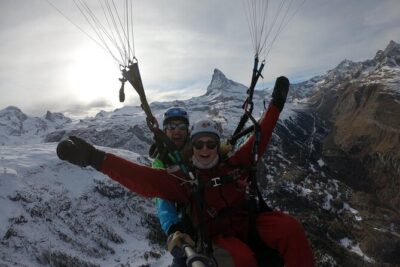
Matterhorn Paragliding flight in Zermatt (20-25min)
Read our review →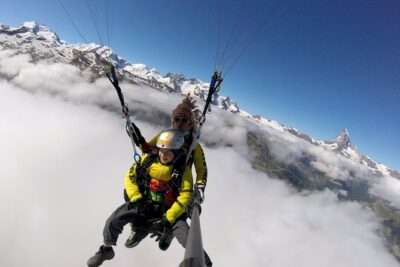
FLYMATTERHORN VIP Paragliding from Zermatt, With Matterhorn View
Read our review →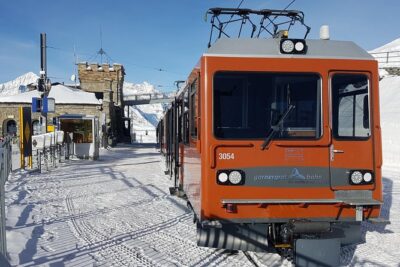
Zermatt & Mt. Gornergrat Small Group Day Trip from Zürich
Read our review →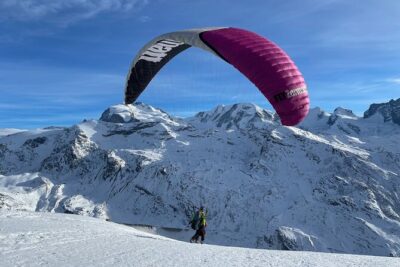
20 to 25 Minute Tandem Paragliding in Zermatt and Matterhorn View
Read our review →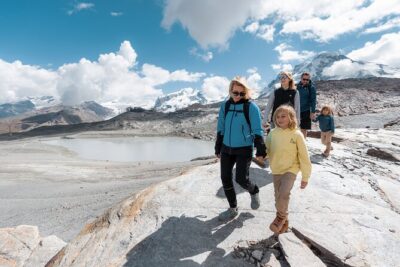
Day Tour to Zermatt Matterhorn and Glacier Paradise from Geneva
Read our review →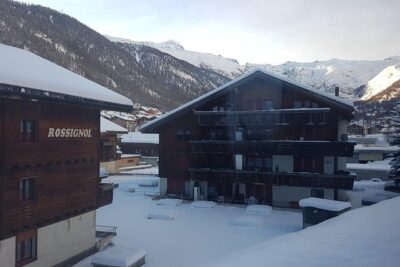
Zermatt & Mt. Gornergrat Small Group Day Trip from Basel
Read our review →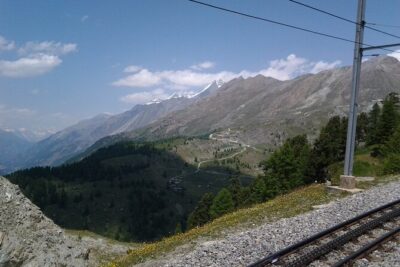
Attraction Ticket: Zermatt to Mount Gornergrat Summit
Read our review →
Panoramic Paragliding Flight in Zermatt Matterhorn (15-20min)
Read our review →Browse the lists this tour appears in