
Reviewed · WALKING TOURS
1.5-Hour Small-Group Nightwatchman Walk in Medieval Lucerne
Fire horns, ghost stories, old maps, and dark river lanes make Lucerne feel different after sunset. This 1.5-hour walk turns the city’s medieval center into a living history lesson, with a costumed Nightwatchman leading you from Peter’s Chapel across the famous covered bridges and into old squares.
I like the small group of no more than 15 people, which should make it easier to hear the guide in narrow streets. I also like the visual aids, including the 1597 Martini plan, projected paintings, and images of lost rooms inside the Water Tower. The main drawback is that the tour can include grim material about torture, punishment, riots, and death, and one person found the walking pace a little quick.
The route covers a great deal in 90 minutes. You will see major sights such as Chapel Bridge, the Water Tower, the Jesuit Church, the Musegg Wall area, and Spreuerbrücke, but the real appeal is the smaller stories attached to old houses, signs, fountains, measurements, and alleyways.
In This Review
- Key points to know before booking
- Meeting the Nightwatchman at Peter’s Chapel
- Chapel Bridge and the Water Tower’s hidden rooms
- Furrengasse and the supernatural side of old Lucerne
- Kornmarkt, the town clock, and old Lucerne’s measuring stick
- Riots, fish markets, and the wine market
- Law, punishment, and the riverside at Im Zöpfli
- An old pharmacy window and the stories behind the façades
- Ritterscher Palace and Lucerne’s Dance of Death
- Jesuit Church, Spreuerbrücke, and the final Chapel Bridge crossing
- What the $39.54 price really buys
- Practical advice for weather, pace, and timing
- Who should book the Nightwatchman walk?
- Should you book this Lucerne night walk?
- FAQ
- Where does the Nightwatchman walk begin?
- Where does the tour end?
- How long does the experience last?
- How much does the tour cost?
- Is the tour offered in English?
- How large is the group?
- Are children allowed to join?
- Does the tour run in bad weather?
- Is hotel pickup included?
- Can I cancel for a full refund?
Key points to know before booking
- A medieval character leads the walk: The costumed Nightwatchman gives the tour a playful setting without turning it into a simple costume show.
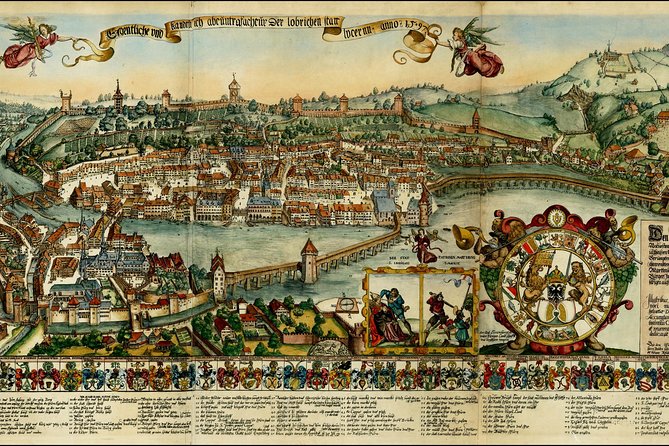
- The 1597 Martini plan gives you a time machine: You can compare Lucerne’s first city map with buildings and streets still visible today.
- The route is packed with visual material: Projected paintings, old artwork, postcards, and historical images help explain what you are seeing.
- The darker side of Lucerne is part of the story: Expect tales of riots, interrogation, corporal punishment, ghosts, and the Dance of Death.
- You get more than famous sights: The walk explains house signs, old measures, a pharmacy window, fountain water, and the origins of local expressions.
- The price is reasonable for a guided city orientation: At $39.54 per person, the tour offers 90 minutes, a local guide, taxes, handling fees, and exclusive postcards.
Meeting the Nightwatchman at Peter’s Chapel
The tour begins at Rosengart Platz, near Peterskapelle, or Peter’s Chapel. The opening is designed to set the mood: you hear a fire horn, followed by an invocation prayer, before the Nightwatchman explains the hard conditions of medieval life.
This introduction gives the walk a clear point of view. You are not only looking at attractive old buildings. You are learning how people lived with fire risks, strict rules, religious authority, disease, punishment, and limited comforts.
Peter’s Chapel dates from the 12th century and is described as Lucerne’s first church. Next to it is the city’s first private stone house. The guide connects this building to the expression stone rich, a small language lesson that makes the architecture easier to remember.
The opening also uses a projector to introduce medieval Lucerne. That matters because many historic details are difficult to read in the dark, especially when the city’s façades look polished and modern at street level.
The tour’s most useful visual tool is the Martini plan, Lucerne’s first city map, dating from 1597. You follow the route on the map and see how many buildings shown there remain today. For you, this is one of the strongest parts of the evening because it turns a walk through the old town into a comparison between past and present.
More Walking Tours in Lucerne
- Lucerne Walking & Boat Tour: The Best Swiss Experience
★ 4.5 · 417 reviews - Exclusive Private Lucerne Walking Tour with Local Guide 3 Hours
★ 5.0 · 80 reviews - Private Classic Lucerne City Walk
★ 5.0 · 16 reviews
Chapel Bridge and the Water Tower’s hidden rooms
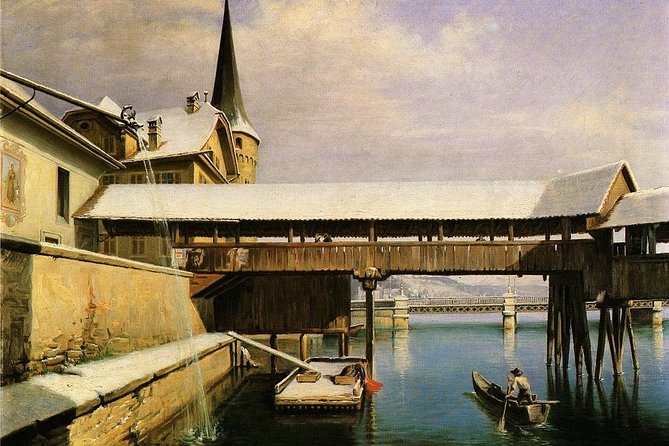
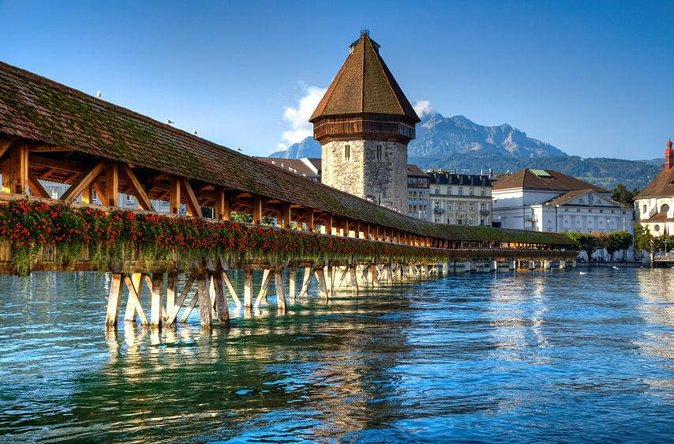
From Peter’s Chapel, the group moves to Chapel Bridge, Lucerne’s best-known landmark. The guide explains that the Water Tower is older than the bridge. The tower dates from the late 13th century, while Chapel Bridge dates from 1365.
That detail changes how you look at the pair. Most people focus on the wooden bridge and its paintings, but the Water Tower has its own darker story. Through photographs, the guide shows the inside of the tower, including its torture chamber, dungeon, and secret room.
The bridge also has a name with a story behind it. The Nightwatchman explains where Chapel Bridge got its name, then later returns to the bridge at the end of the route. This repeated visit gives the walk a tidy shape and lets you see the bridge both as an entry point and as a final medieval image.
The bridge is free to view, but the tour does not promise entry into the Water Tower. The value here comes from the explanation and projected images rather than from an interior visit.
Furrengasse and the supernatural side of old Lucerne
The walk continues around Kapellplatz and into Furrengasse. Here the guide talks about life in the medieval Republic of Lucerne, when the city was a growing political and commercial center.
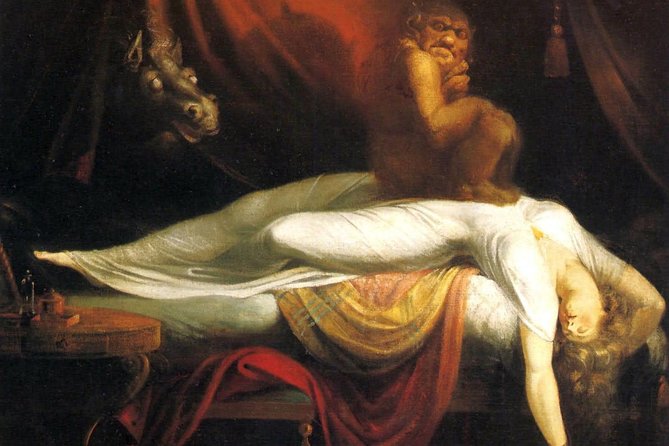
The stories become less official and more folkloric. You hear about a ghost and the Toggeli, described as an incubus or love robber. These tales show how people once explained fear, bad dreams, desire, and misfortune.
This section is likely to appeal to families with older children and anyone who enjoys a little theater with their history. It is not a ghost tour in the modern horror-house sense, though. The supernatural stories are woven into a wider account of daily life and old beliefs.
Children up to age 12 are free, provided they are accompanied by an adult. The guide’s humor and visual material also make the experience more approachable for families, although the later sections become more graphic.
Kornmarkt, the town clock, and old Lucerne’s measuring stick
At Kornmarkt, or Town Hall Square, the Nightwatchman turns to civic power and public life. You see the Renaissance Town Hall and hear about its tower clock, which lacks a minute hand.
That missing minute hand is a small but telling detail. It reminds you that medieval and early modern timekeeping did not serve the same needs as modern life. People lived by larger divisions of the day, church bells, work patterns, and public signals.
You also hear the story of the Giant of Reiden and see the Lucerne Foot and Elle, official measures used in old Lucerne. These old units are the sort of detail you could easily miss while taking photographs of the Town Hall. They show how trade and public order depended on agreed measurements.
For me, this is where the tour earns its price. A standard orientation walk might point out the Town Hall, but this experience gives you the odd, memorable facts that help the place stick in your mind.
A completely different kind of day:
- Mount Pilatus Summit from Lucerne With Lake Cruise
★ 4.5 · 1,260 reviews - Jungfraujoch Top of Europe Day Trip from Lucerne
★ 4.5 · 840 reviews - Lake Lucerne Panoramic Sightseeing Cruise
★ 4.5 · 363 reviews - Mt Titlis Cable Car from Engelberg with Ice Flyer
★ 4.5 · 290 reviews
Riots, fish markets, and the wine market
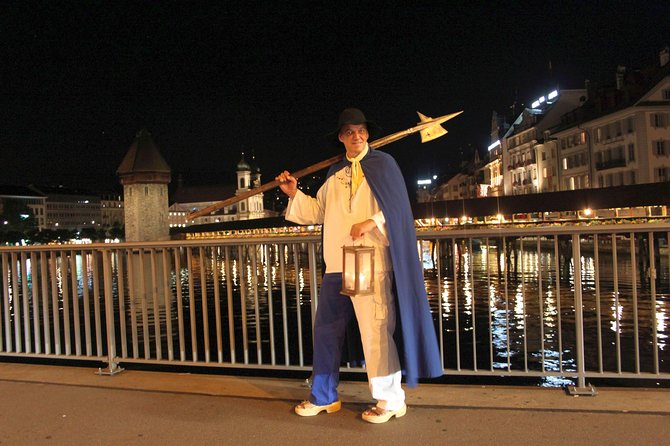
In Brandgässli, the guide tells the story of a Lucerne riot before leading you toward the former fish market, now known as Weinmarkt. The route makes clear that the old town was not only a setting for grand churches and decorated houses. It was also a place of conflict, commerce, and public disorder.
At Weinmarkt, look up at the old guesthouse signs and painted façades. These signs helped identify businesses before modern address systems and branding. The painted houses also show how much visual information old streets once carried.
The guide points out the former pharmacy house of Renward Cysat, where you can read the Latin sentence Amor medicabillis nullis herbis, meaning there is no cure for a broken heart. It is a playful inscription, but it also ties the building to the practical and symbolic role of an old pharmacy.
You receive a glass of Lucerne fountain water during this section. That simple refreshment is one of the tour’s unusual touches, and it gives you a direct connection to the city’s public water sources.
The Nightwatchman also discusses the Reformation and Counter-Reformation, then leads you through the lower wine market, where the pillory once stood. The subject matter shifts quickly, from painted house signs to religious conflict to public punishment. That variety keeps the route moving, though anyone wanting a slow architectural study may find the pace brisk.
Law, punishment, and the riverside at Im Zöpfli
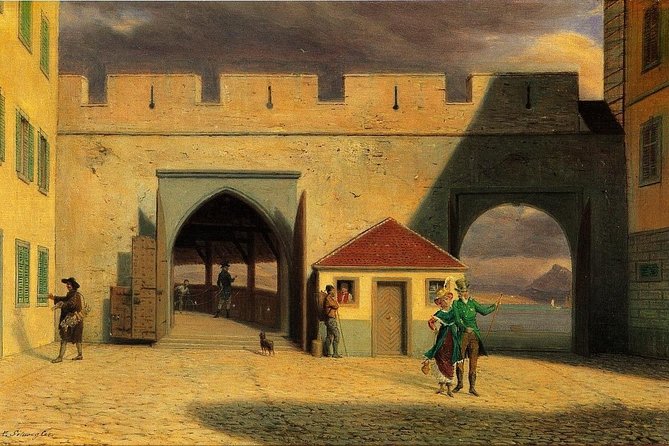
At the riverside square called Im Zöpfli, the theme turns to law and order. Projected paintings show methods of prosecution, interrogation, and corporal punishment in medieval Lucerne.
This is one of the tour’s most graphic sections. The material helps explain how public justice worked before modern courts and prisons, but it is not softened for comfort. If you are traveling with young children, keep in mind that the content may be unsettling even though children under 12 can join free.
The riverside setting adds to the effect. You are standing in a quiet square near the Reuss while hearing about punishment and control. That contrast is useful: the old town’s calm appearance hides a much harsher civic life.
The group then crosses Reussbrücke and sees Spreuerbrücke, the Needle Dam, and parts of the Musegg Wall. These sights are not treated as long formal stops, but they help you understand Lucerne’s defenses, river control, and network of bridges.
An old pharmacy window and the stories behind the façades
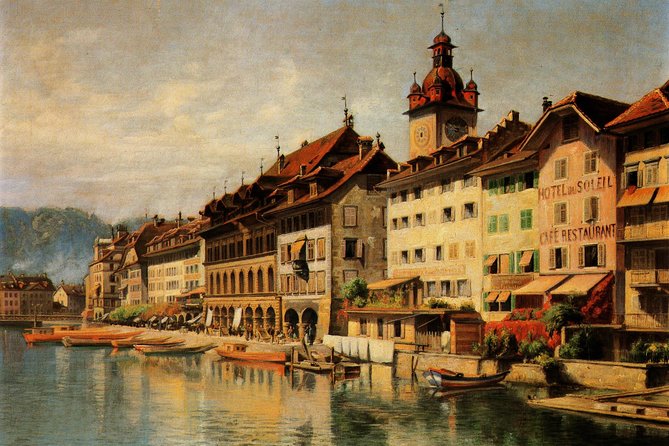
A few steps farther, the Nightwatchman points out the medieval pharmacy window of the Alte Suidtersche Apotheke. The window is described as breathtaking, and it gives you another chance to look closely at a small feature rather than simply passing through the old town.
The tour is strongest when it draws your attention to things you might otherwise walk past. A pharmacy window, a guesthouse sign, a house inscription, and an old measuring stick can reveal as much about the city as a major monument.
This is also a good reason to take the tour early in your Lucerne stay. The walk gives you a set of visual clues. Later, when you pass through these streets alone, you will have more context for what you see.
Ritterscher Palace and Lucerne’s Dance of Death
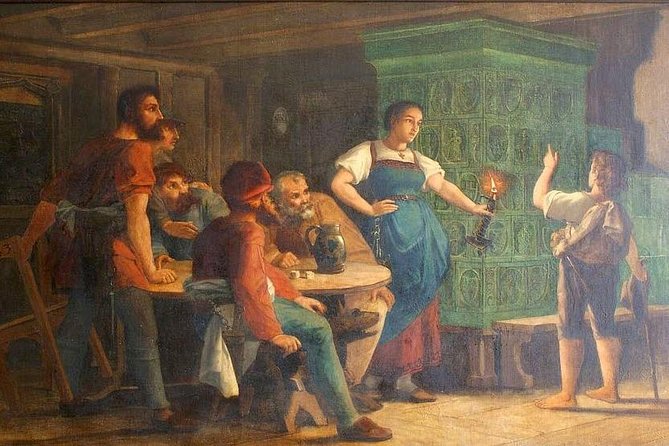
At Ritterscher Palace, the Nightwatchman points out guardian demons and stops at the legendary house of Lux Ritter. You hear why the first two floors differ from the third, then learn about Hans von Trient, an unlucky stonemason.
The stop adds a human scale to the buildings. Instead of treating the façades as anonymous old walls, the guide connects them with owners, builders, legends, and architectural changes.
The highlight here is a presentation of seven paintings from the Dance of Death. The images are projected onto a house wall, allowing the guide to show details that may not be obvious in the dim street.
The Dance of Death theme fits the whole evening. Medieval Lucerne was shaped by religion, mortality, social rank, and the reminder that death could claim anyone. The presentation also gives you a visual break from listening to dates and names.
Some people may find the subject matter gory. That is not a flaw if you want an honest look at medieval life, but it is worth knowing before you book. This is not a purely gentle stroll through pretty streets.
Jesuit Church, Spreuerbrücke, and the final Chapel Bridge crossing
The route passes the Church of the Jesuits, identified as the first Baroque building in Switzerland, dating from 1677. You do not need a separate church visit for this tour, but the sight adds a later architectural layer to an evening focused mainly on medieval Lucerne.
The final section returns to Chapel Bridge. You cross the bridge, see its paintings, and learn why it was built diagonally over the river.
Ending where you began works well. By this point, you have seen the bridge in context, compared old maps with the present city, and heard how the river shaped Lucerne’s roads, bridges, defenses, and trade.
The complete route is approximately 90 minutes, with the listed points generally receiving about 10 minutes each. The schedule is full, so you should expect a steady walk rather than long pauses for photography.
What the $39.54 price really buys
At $39.54 per person, this is not the cheapest way to see Lucerne’s old town, since you can walk past most of the sights for free. The price makes sense if you want interpretation, storytelling, projected images, exclusive postcards, and a guide who connects ordinary details to the city’s past.
All taxes, fees, and handling charges are included. Hotel pickup and drop-off are not included, but the meeting point at Rosengart Platz is in central Lucerne and near public transportation.
The group limit of 15 is important. A smaller group should feel more personal than a large city walk, especially in Furrengasse, Brandgässli, and the riverside lanes. It also gives you a better chance of hearing the guide’s stories clearly.
The tour is offered in English. Confirmation arrives when you book, and the experience is currently recommended by 94 percent of people who rated it, with a 4.7 rating from 34 reviews. Those figures suggest a reliable experience, but the guide’s personality will still shape the evening. Ralf, one named guide, received especially warm praise for being personable, courteous, funny, and well prepared.
Practical advice for weather, pace, and timing
The tour runs in rain, snow, or sunshine. Wear proper outdoor clothing and bring an umbrella or raincoat when the forecast looks uncertain. Evening conditions can make the old streets feel colder than expected.
The walk is suitable for most people and service animals are allowed. Since one person found the guide’s pace a little fast, tell yourself to keep up, especially if you want to stay close enough to hear every story.
The experience is booked an average of 44 days ahead, so I would reserve before your Lucerne visit rather than count on a last-minute place. Free cancellation is available until 24 hours before the start time. Cancellations or changes made inside that window are not refunded or accepted.
The guide supplies exclusive postcards featuring old Lucerne. The projected images and visual aids are particularly useful because they show interiors, paintings, and historical scenes that are not always visible from the street.
Who should book the Nightwatchman walk?
I would recommend this tour to first-time visitors who want a strong orientation to central Lucerne, families with children who enjoy stories and old buildings, and repeat visitors looking for a fresh angle on familiar sights.
It is also a good pick if you like architecture but prefer stories about people, beliefs, trade, crime, and city life over a list of construction dates. The guide’s humor helps keep the material light, even when the subjects become grim.
I would hesitate if you dislike theatrical guiding, ghost stories, projected images, or discussions of torture and punishment. I would also choose a different option if you want to enter major monuments or spend a long time photographing each location.
Should you book this Lucerne night walk?
Book it if you want Lucerne’s old town to feel more than decorative. The Martini plan, the Water Tower’s hidden rooms, the old measurements, the pharmacy inscription, the fountain water, and the Dance of Death images give you plenty of memorable details for the price.
Skip it if you only want a quiet evening stroll or a fast checklist of landmarks. For most people who want history delivered with humor, atmosphere, and a little darkness, this is a very good-value introduction to medieval Lucerne.
FAQ
Where does the Nightwatchman walk begin?
The tour begins at Rosengart Platz, 6004 Luzern, Switzerland.
Where does the tour end?
The walk ends back at the meeting point.
How long does the experience last?
The tour lasts approximately 1 hour and 30 minutes.
How much does the tour cost?
The listed price is $39.54 per person.
Is the tour offered in English?
Yes. The experience is offered in English.
How large is the group?
The tour has a maximum of 15 people.
Are children allowed to join?
Yes. Children up to 12 years old are free, but they must be accompanied by an adult.
Does the tour run in bad weather?
Yes. Tours take place rain, snow, or shine. You should dress appropriately and bring an umbrella or raincoat when needed.
Is hotel pickup included?
No. Hotel pickup and drop-off are not included.
Can I cancel for a full refund?
Yes, if you cancel at least 24 hours before the experience start time. Cancellations made less than 24 hours before the start time are not refunded.
Just added in Lucerne
- Private Transfer: Lucerne to Zurich Airport ZRH by Luxury Van★ 4.5 · 6 reviews
- Touristic highlights of Lucerne on a Private half day tour with a local★ 4.0 · 5 reviews
- Weggis Vitznau Foxtrail Helios★ 4.5 · 8 reviews
- Private Transfer: Lucerne to Zurich Airport ZRH by Business Car★ 5.0 · 11 reviews
- Tandem Flight Zurich-Engelberg★ 5.0 · 7 reviews
- The Lives and Legends of Lucerne: A Self-Guided Audio Tour★ 5.0 · 6 reviews
- Panoramic E-Bike Tour with a Lake Cruise★ 5.0 · 10 reviews
- Paragliding Tandem in Switzerland★ 5.0 · 9 reviews
Walking Tours, compared.
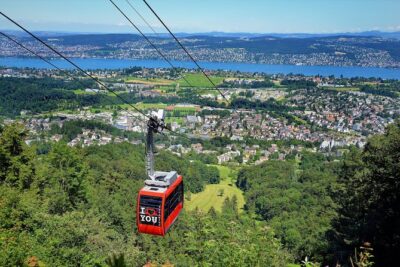
Zurich Walking Tour With Cruise and Aerial Cable Car
Read our review →
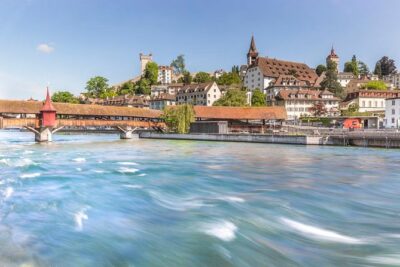
Lucerne Walking & Boat Tour: The Best Swiss Experience
Read our review →
3 in 1: Zurich Walking Tour – Cruise on the Lake – Cable Car Ride to Felsenegg
Read our review →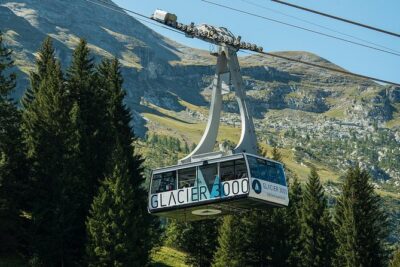
Glacier 3000 Ticket Including Cable Car and Peak Walk by Tissot
Read our review →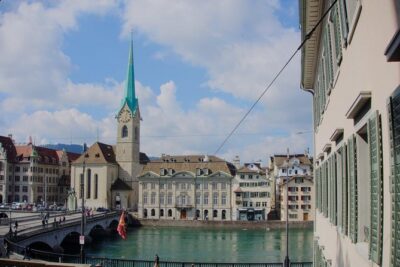
Zurich Private Customizable Guided Walking Tour
Read our review →
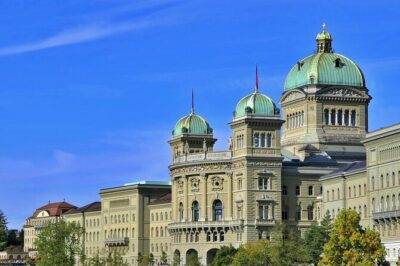
Bern Walking Tour: Explore Top Sights & Hidden Gems
Read our review →Browse the lists this tour appears in