
Reviewed · GRAUBUNDEN TOURS
Guided tour through the old town of Chur in German
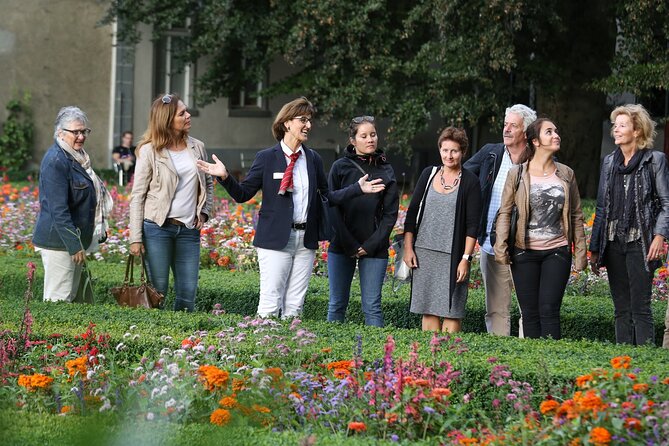
Chur’s old town rewards slow walking. This two-hour German-language tour links Roman-era streets, medieval towers, grand civic buildings, and the 800-year-old cathedral in one clear route. I like the compact price and the way the walk mixes major sights with small details, such as the story behind the crooked town hall and the origins of Bärenloch. The main consideration is simple: you need enough German to follow the guide comfortably.
I also like the route’s variety. You begin near the station, cross modern Chur, enter the old town, and finish at Obertor, so the city unfolds in a natural sequence rather than feeling like a collection of disconnected monuments. The cathedral visit is a real highlight, but museums are not included, and some stops are brief outdoor explanations rather than full visits.
In This Review
- Chur tour highlights at a glance
- Starting beside the mountains on Bahnhofstrasse
- Regional architecture at the Rhaetian Railway building
- Art, architecture, and a skull-shaped torso
- Entering the old town at Postplatz
- Fontanapark and the memory of a Baroque garden
- Kornplatz, from monastery square to granary square
- The crooked town hall and its unusual shape
- Reichsgasse and the old north-south route
- St. Martinsplatz and a possible church visit
- The 800-year-old cathedral on the Episcopal Court
- Bärenloch, the old town’s most atmospheric corner
- Arcas and the square that changed in 1971
- Obere Gasse and Graubünden’s local flavors
- Finishing beneath Obertor
- What $24.90 buys you in practical terms
- Who should book this German-language walk?
- Should you book the Chur old-town tour?
- FAQ
- Where does the Chur walking tour begin?
- What time does the tour start?
- Where does the tour finish?
- How long is the tour?
- Is the tour offered in English?
- Are museum admissions included?
Chur tour highlights at a glance
- The oldest city in Switzerland: The walk introduces Chur as a place where people lived 11,000 years ago.
- A clear two-hour route: Thirteen stops take you from Bahnhofstrasse to Obertor, with the old town at the center.
- A remarkable cathedral: The 800-year-old Cathedral of St. Mary of the Assumption includes a late Gothic high altar and detailed interior features.
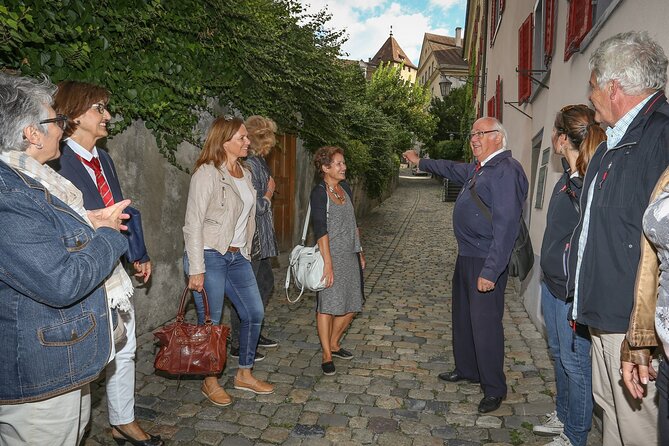
- Stories behind ordinary places: The guide explains why Kornplatz changed names, why the town hall looks crooked, and where Bärenloch got its name.
- Local food along Obere Gasse: Salsiz, pear bread, nut cake, and Röteli give you a quick taste of Graubünden.
- Small group format: The group is limited to 20 people, which should make questions and conversation easier.
Starting beside the mountains on Bahnhofstrasse
The tour begins at 10:00 a.m. outside the Chur Tourist Information office at Bahnhofstrasse 32. This is a practical meeting point near the city’s main transport area, and the opening view immediately gives you a sense of Chur’s setting, with mountains surrounding the city.
The guide starts with the atmosphere of Chur rather than rushing straight to a monument. That matters because the city has two faces. Near the station, you see the working, modern side of town. A few minutes later, you enter narrow lanes and medieval squares. The change is part of the pleasure.
Your first stop is free, as are all the listed sights on the route. The $24.90 price pays for the guide’s interpretation, not admission tickets. If you want museum interiors or special exhibitions, you will need to arrange those separately.
More Graubunden trips:
- From Milan: St. Moritz and Panoramic Bernina Express Tour
★ 4.0 · 215 reviews - Davos Absolutely Free Flying Paragliding Tandem Flight 1’000 Meters High
★ 5.0 · 111 reviews - DAVOS: Paragliding Tandem Flight In Swiss Alps (Video & Photos Included)
★ 5.0 · 55 reviews
Regional architecture at the Rhaetian Railway building
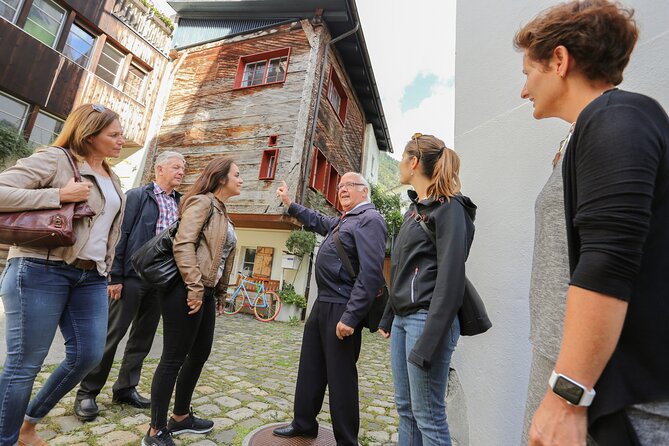
The Rhaetian Railway administration building is explained from the outside. Its style reflects the Bündner Heimatstil, a regional movement that looked to local building traditions while adapting them for newer purposes.
This is a useful early stop because it gives you architectural context before the walk turns fully medieval. The building is representative without being overly grand, and the guide can help you notice details you might otherwise pass without a second glance.
The stop lasts about five minutes, so do not expect an extended architectural lecture. It works best as a short introduction to Graubünden’s local identity and to the importance of the railway in the region.
Art, architecture, and a skull-shaped torso
At the Bündner Kunstmuseum, you pause in the garden between two very different buildings. Villa Planta, built in 1875, is neoclassical. The newer extension, completed in 2016 by architects Barozzi and Veiga, gives the museum a modern counterpoint.
The guide also points out H.R. Giger’s art object Torso with a long skull shape. This brief outdoor stop is a good example of the tour’s range. You are not only hearing about bishops, towers, and old walls. You are also seeing how Chur continues to develop as a cultural center.
Admission to the museum is not included, and the tour does not turn into a museum visit. If Giger’s work or the museum’s collection interests you, note the location so you can return later with more time.
Entering the old town at Postplatz
Postplatz is where modern Chur’s daily traffic routes meet. Bahnhofstrasse continues toward Poststrasse and the old town, while Grabenstrasse forms another major route. The Graubündner Kantonalbank headquarters gives the square a strong architectural presence.
The guide uses this junction to explain how people move through Chur today and how the old town begins. I find this kind of transition useful because it prevents the historic center from feeling sealed off from ordinary life. Chur is not a preserved stage set. It is a working city, and Postplatz shows that clearly.
Allow about ten minutes here. The stop is less about one single attraction and more about understanding the city’s layout before you enter the older streets.
A few more options to weigh up in Graubunden
- Chur Scavenger Hunt and Sights Self-Guided Tour
★ 5.0 · 2 reviews - Chamonix & Mont Blanc Panoramic Sky-Glass Bus Guided Day Trip
★ 4.0 · 1,324 reviews - Chamonix Mont-Blanc Full Day Guided Tour
★ 5.0 · 314 reviews - Chamonix & Mont Blanc Guided Day Trip with SkyView Panoramic bus
★ 4.5 · 310 reviews
Fontanapark and the memory of a Baroque garden
Fontanapark offers a pause among the buildings. In its present form, the park recalls the boundaries of a Baroque garden that existed before 1860. The guide tells stories here while you take in the open space and greenery.
This is one of the route’s welcome changes of pace. Old-town walks can become a steady march from facade to facade, but Fontanapark gives you room to stop, listen, and look around.
The stop lasts about ten minutes. Since the tour begins in the morning, the park also helps break up the first part of the walk before you move into the squares and lanes of the old center.
Kornplatz, from monastery square to granary square
Kornplatz has a name that reflects a later chapter of its past. Until the 17th century, it was called Klosterplatz. After the adjoining monastery closed and a granary was built there, the newer name took hold.
The detail is small, but it is exactly the sort of story that makes a town easier to read. Place names are often old clues hiding in plain sight. A five-minute stop here gives you a quick lesson in how religious and commercial uses shaped Chur’s public spaces.
Do not expect a large monument at every stop. Some locations are valuable because of the story attached to them, and Kornplatz is one of those places.
The crooked town hall and its unusual shape
The town hall is one of the more memorable stops because its form seems slightly out of line. Its floor plan is irregular, and the roof ridge slopes in a way that can make the building look as if it has shifted over time.
The guide explains that the odd appearance comes from the building’s history, not from any joke about local politics. You may go inside, which gives this stop more substance than a quick look at an exterior facade. It lasts about 15 minutes, one of the longer pauses on the route.
This is a good place to pay attention to the guide’s storytelling. The building’s appeal is not based on polished symmetry. Its character comes from the way old structures change, adapt, and retain awkward traces of earlier use.
Reichsgasse and the old north-south route
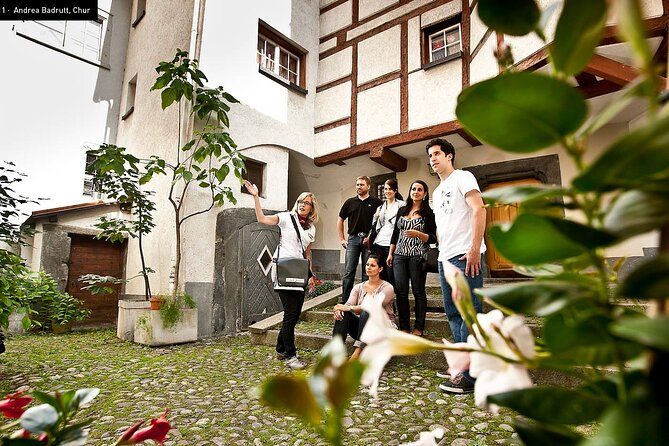
Reichsgasse was once Chur’s main street. Today, it is a narrower old-town lane, but the guide connects it to the city’s former north-south route.
You also hear amusing stories about the car ban in Graubünden. That adds a lighter moment after the architectural and civic explanations. The stop is only about five minutes, but it shows how the tour balances serious history with anecdotes.
I appreciate that approach for a two-hour walk. A steady stream of dates would wear you down. Short stories help you remember the place and keep the pace friendly.
St. Martinsplatz and a possible church visit
St. Martinsplatz sits in Chur’s oldest area, between the former Obertor and Untertor. It formed part of the historic connection running north to south through the city, and St. Martin’s Church dominates the square.
If the church is open, the group takes a look inside. That condition is important. The interior visit is not guaranteed, so you should treat it as a welcome possibility rather than a fixed part of the experience.
The stop lasts around ten minutes. Even from the square, the church helps you understand the scale and structure of the old town. The guide can place it within the surrounding streets and explain why this part of Chur mattered.
The 800-year-old cathedral on the Episcopal Court
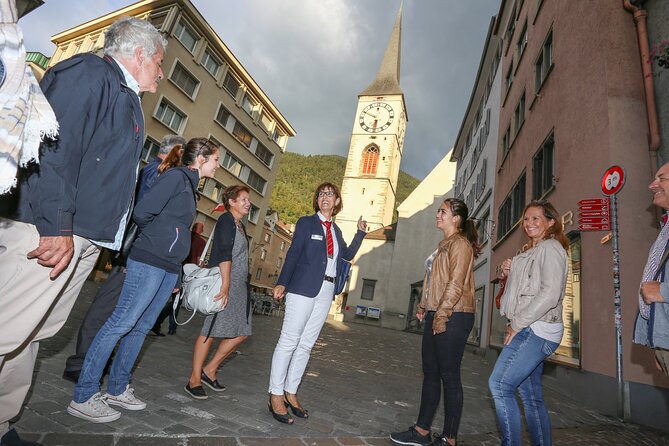
The Cathedral of St. Mary of the Assumption is the route’s central sight. It rises above the old town in the Episcopal Court and dates back more than 800 years. Inside, you walk through the naves and hear about the building’s art and religious importance.
The late Gothic high altar, with its golden appearance, is a major visual point. The cathedral is also one of Switzerland’s important cultural monuments, so this is more than a quick photo stop. The 15-minute visit gives the guide time to point out details that are easy to miss when you enter alone.
I would plan your attention here. Look up, look toward the altar, and listen for the explanation of how the cathedral fits into Chur’s religious past. Because the tour is in German, this is one place where language ability matters most. The setting is impressive, but the guide’s interpretation is what turns a beautiful church into a useful part of the city story.
Bärenloch, the old town’s most atmospheric corner
Near the Altstadt neighborhood association, the route reaches Bärenloch. It is described as the most enchanted place in Chur and the best-preserved part of the old town. The guide explains the origin of its unusual name.
This five-minute stop is likely to appeal to anyone who prefers small urban details to grand monuments. The appeal comes from the preserved setting and the name’s story, not from a long list of formal sights.
Keep your eyes on the surrounding buildings and passageways. In a place like this, the guide’s explanation helps you notice how the old town has survived as a connected neighborhood rather than just a row of isolated attractions.
Arcas and the square that changed in 1971
Arcas looks medieval and picturesque today, but its appearance is relatively recent in one important sense. Until 1971, magazine structures blocked much of the space. Their removal opened the square and revealed the appealing view you see now.
That detail gives you a useful reminder: old towns are not frozen in one date. Preservation can involve clearing away later structures as well as protecting original ones. The stop lasts only five minutes, but the change in Arcas is easy to understand when you know what stood there before.
This is also a pleasant point for photographs, though the tour keeps moving. If you want a long pause in the square, return after the walk.
Obere Gasse and Graubünden’s local flavors
Obere Gasse brings the tour back to everyday pleasures. Along this historic lane, you find specialties linked with Chur and Graubünden, including salsiz, pear bread, nut cake, and Röteli.
The guide does not include food tastings, so think of this as a short introduction rather than a meal stop. Still, it is practical information. If you want to take home something local, or simply recognize regional foods during the rest of your stay, this lane gives you a useful starting point.
I like that food appears near the end of the route. After churches, civic buildings, and defensive towers, local specialties reconnect the old town with present-day life.
Finishing beneath Obertor
The tour ends outside Obertor, one of the remaining towers from Chur’s medieval fortifications. Along with the Maltese Tower and Sennhofturm, it helps preserve the outline of the old fortified city.
Obertor became a landmark partly because of its neat appearance. The guide stays outside and brings the walk to a relaxed close after about ten minutes. Ending here is practical because you finish at a clear landmark rather than back at the starting point.
The route is not a loop, so note that you will need to make your own way onward after the tour. The end point also gives you a good base for continuing through the old town or returning toward the station.
What $24.90 buys you in practical terms
At $24.90 per person, this is a fair price for a two-hour guided introduction to Chur. You are paying for a local city guide, a planned route, access to the cathedral when included in the visit, and stories that connect places that might otherwise seem unrelated.
The value is strongest if you are visiting Chur for the first time and want orientation before exploring alone. The guide points out the main sights, explains local architecture, and gives you several reasons to slow down in the old town.
The value is weaker if you want long interior visits or museum time. The Kunstmuseum is seen from the garden, and museum admission is not included. Several stops last only five minutes, so this is a brisk overview rather than a specialist architecture tour.
A mobile ticket makes arrival simple. Confirmation is provided at booking, and the group can include up to 20 people. That is small enough to keep the guide within reach, though the experience will not feel private.
Who should book this German-language walk?
I would choose this tour if you want a clear introduction to Chur, enjoy local stories, and understand German well enough to follow a spoken explanation. Families and school-age groups may find the style approachable. A school project week group received four guided walks, and the guides included the students in an entertaining way while responding to their different needs and interests. That suggests a flexible tone, though it does not guarantee a special children’s format for every departure.
The walk suits most people because the route stays in the city and lasts about two hours. Service animals are allowed, public transportation is nearby, and most people can participate. The provided information does not specify step-free access or the exact surface conditions, so anyone with mobility concerns should confirm those details before booking.
You can cancel for a full refund up to 24 hours before the local start time. Changes made inside that 24-hour window are not accepted, and the tour requires a minimum number of participants. If that minimum is not reached, you will be offered another date or experience, or a full refund.
Should you book the Chur old-town tour?
Book it if you want stories, orientation, and a cathedral visit in a short morning walk. The best parts are the variety of the route, the guide’s attention to unusual details, and the way the tour moves from modern Chur into its oldest streets.
Skip it if you need an English-language experience, extensive museum time, or a slow photographic walk. For German-speaking visitors, especially first-time visitors to Chur, $24.90 is a sensible way to get your bearings and learn what deserves a closer look later.
FAQ
Where does the Chur walking tour begin?
It begins at Bahnhofstrasse 32, 7000 Chur, Switzerland, in front of the Chur Tourist Information office.
What time does the tour start?
The tour starts at 10:00 a.m.
Where does the tour finish?
It ends at Obertor in Chur, outside the medieval city gate.
How long is the tour?
The walking tour lasts approximately two hours.
Is the tour offered in English?
No. The experience described here is a guided tour in German.
Are museum admissions included?
No. Museums are not included. The route visits the garden of the Bündner Kunstmuseum and discusses its buildings and an art object, but museum entry is separate.
Just added in Graubunden
- St. Moritz to Milan Bergamo Airport (BGY) – Departure Transfer★ 5.0 · 1 review
- Private Transfer from Sankt-Moritz to Zurich Airport★ 4.0 · 3 reviews
- Private direct transfer from St. Moritz to Munich★ 5.0 · 1 review
- Davos Ski And Fly (Video & Photos Included)★ 5.0 · 6 reviews
- Paragliding Davos Early Bird (Video & Photos Included)★ 5.0 · 5 reviews
- Davos Foxtrail Cuolm Strinau★ 5.0 · 1 review
- Davos – Private walking tour★ 5.0 · 1 review
- Davos Switzerland Escape Game Private Adventure★ 5.0 · 2 reviews
Graubunden Tours, compared.
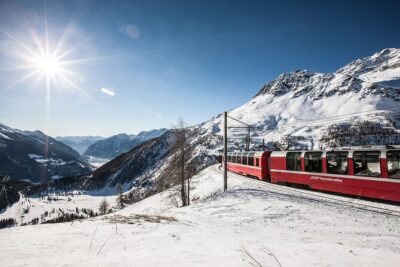
From Milan: St. Moritz and Panoramic Bernina Express Tour
Read our review →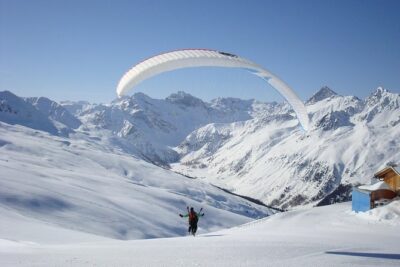
Davos Absolutely Free Flying Paragliding Tandem Flight 1’000 Meters High
Read our review →
DAVOS: Paragliding Tandem Flight In Swiss Alps (Video & Photos Included)
Read our review →
DAVOS: Paragliding For 2 Passengers – Together In The Air! (Video&Photos Incl.)
Read our review →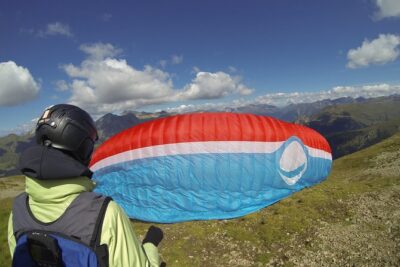
Davos Paragliding Private Tandem Pilot Half Day
Read our review →
Paragliding Davos Early Bird (Video & Photos Included)
Read our review →
Browse the lists this tour appears in