
Reviewed · SELF-GUIDED TOURS
Revealing Lucerne: Self-Guided Reading City Tour
Lucerne hides its best stories in plain sight. This self-guided reading tour links the city’s famous sights with more than twenty frescoed houses, old civic buildings, and reminders of its less cheerful past. I like the way it goes beyond postcard Lucerne, and I like the freedom to pause for coffee, photos, or a closer look whenever you wish. The main tradeoff is simple: you guide yourself, so the experience depends on your phone, internet connection, and willingness to read as you walk.
For $6.24 per person, this is a remarkably inexpensive way to get more from Lucerne’s compact center. You will not have a live guide to answer questions, adjust the pace, or add personal stories, but the route is laid out with directions, photos, and written explanations. Plan on roughly one to two hours, though the flexible format lets you take longer.
In This Review
- Key points at a glance
- Why this inexpensive walk works in Lucerne
- Starting at the Jesuit Church and Ritterscher Palace
- Quiet churches and the Dance of Death
- Muhlenplatz and Lucerne’s uncomfortable past
- Nölli Tower and the Musegg Wall
- Weinmarkt, where facades tell the city’s story
- Hirschenplatz and a gallery of painted facades
- The Rathaus, Water Tower, and Chapel Bridge
- St. Peter’s Chapel and the Fritschi Fountain
- Hofkirche and the Lion Monument finale
- What $6.24 really gets you
- Who should choose this self-guided tour?
- Should you book it?
- FAQ
- Where does the Lucerne self-guided tour begin?
- Where does the tour end?
- How long does the tour take?
- How much does the experience cost?
- Is this a guided walking tour with a live guide?
- Do I need a mobile phone and internet?
- Is the tour private?
- Are admission tickets included?
- Is the tour suitable for most people?
- Can I cancel for a full refund?
Key points at a glance
- More than twenty frescoed houses: Look closely at facades around Weinmarkt and Hirschenplatz, where paintings tell stories of faith, politics, trade, and local pride.
- A darker side of Lucerne: The route points out former sites connected with an orphanage, prison, brothel, and executioner’s house.
- Two famous covered bridges: Chapel Bridge offers painted panels over the Reuss, while Spreuer Bridge presents a sobering Dance of Death.
- A remarkably low price: At $6.24, the tour costs little compared with a live walking tour and still covers the city’s main sights.
- A flexible private walk: Only your group takes part, and you can stop whenever you like rather than keeping pace with a larger group.
- A strong finish: The route ends at the Lion Monument, one of Lucerne’s most moving sights.
Why this inexpensive walk works in Lucerne
Lucerne is easy to admire and surprisingly easy to miss. The lake, mountain views, Chapel Bridge, and Lion Monument get most of the attention. Yet the old center is packed with painted facades and small clues to the city’s social and political life.
That is where this tour earns its modest price. It does not simply send you from one famous attraction to the next. It explains what you are looking at, then adds lesser-known places such as the former prison and executioner’s house. You get a better sense of Lucerne as a working medieval town, not just a pretty stop on a Swiss itinerary.
The format is a reading tour delivered through a link after booking. You need your own mobile phone and internet access. Since there is no live guide, download or open the material before setting off and make sure your phone is charged.
The stated duration is one to two hours. The listed stop times add up to about two hours, but you can move faster or pause longer. That flexibility is one of the best features. One of the strongest pieces of feedback specifically praised being able to stop for coffee, something a fixed group walk does not allow.
More Self-Guided Tours in Lucerne:
- Mt. Rigi Self-Guided Tour: Lake Lucerne Cruise and Mountain Spa
★ 4.5 · 83 reviews - Revealing Lucerne: Self-Guided Audio City Tour
★ 4.0 · 20 reviews - Lucerne Scavenger Hunt and Sights Self-Guided Tour
★ 4.5 · 14 reviews
Starting at the Jesuit Church and Ritterscher Palace
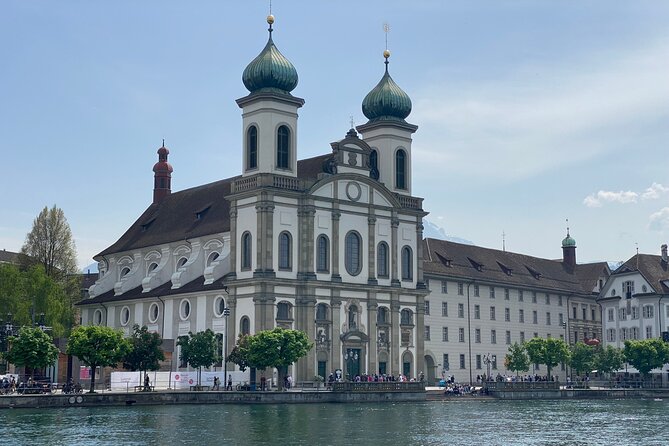
The walk begins at Jesuit Church Lucerne, on Bahnhofstrasse 11A. This is a sensible starting point because the church gives you an immediate introduction to Lucerne’s Baroque side. Its graceful exterior and ornate interior offer a calm opening before the route moves into the busier old town.
You are allowed to enter without an admission fee, though the tour allocates only about five minutes here. Treat that as a starting point rather than a strict limit. If the church is open and you enjoy decorative interiors, a little extra time is worthwhile.
Next comes Ritterscher Palace, another short stop. The building may look restrained compared with Lucerne’s more decorated facades, but its story gives the route a human angle. You learn how a common worker rose to become the wealthiest Lucerner of his era.
That contrast matters. Lucerne’s grand buildings were not created only by princes and church leaders. Wealth could also come from determined local people who climbed the social ladder. The palace is a quick stop, but its story helps you read the city through the lives of its residents.
Quiet churches and the Dance of Death
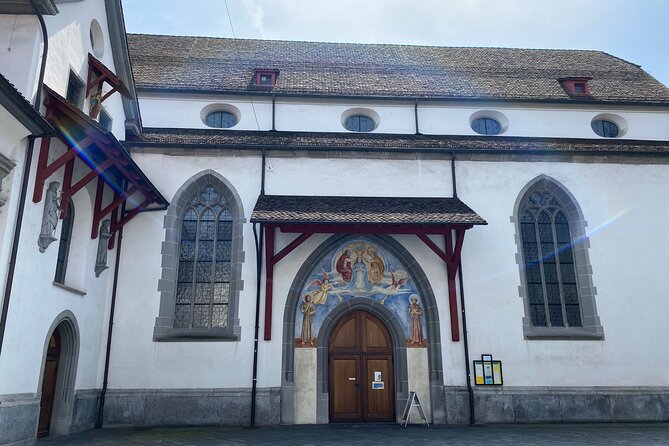
At Franziskanerkirche, the tone changes. The Franciscan Church is described as a quiet place, with a sense of solitude that makes it useful for a short pause. Above the entrance, a portal shows the coronation of Saint Mary.
This is one of the places where a written guide can improve a casual walk. You might notice the doorway, step inside, and leave without understanding what you saw. The explanation gives the art a clear purpose and encourages you to look above eye level.
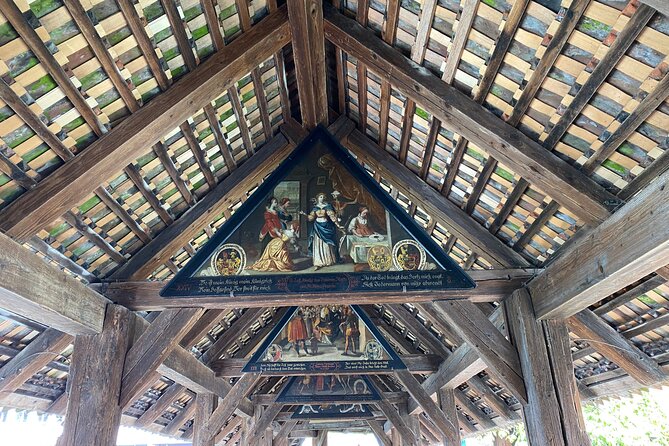
The route then reaches Spreuer Bridge, one of Lucerne’s two celebrated covered bridges. Its painted panels show the Dance of Death, a medieval theme that reminds people that death comes for everyone, rich or poor.
The setting makes the message especially effective. You cross a historic wooden bridge while scenes of death appear overhead. It is not cheerful decoration, and that is exactly the point. The paintings turn an ordinary crossing into a lesson about mortality, faith, and social equality.
The short suggested visit may feel too brief if you want to study the panels. Take your time here, especially if you are interested in religious art or medieval ideas. The bridge is also a practical route across the river, so you can continue at your own pace without waiting for a group.
Muhlenplatz and Lucerne’s uncomfortable past
Muhlenplatz is the longest stop, with about twenty minutes devoted to four locations viewed from a scenic distance. This is where the tour moves beyond handsome churches and public squares.
You learn about the former St. James Hospital building, which once served as an orphanage. The route also identifies the former prison, former brothel, and executioner’s house. These places reveal how Lucerne cared for, controlled, excluded, and punished people.
That material gives the walk more weight. A city is not only its churches, fountains, and wealthy homes. It also includes institutions for children without parents, places of confinement, and people whose work society needed but kept at the margins.
The information is viewed from a distance rather than through a visit inside each building. That limits the physical experience, but it also keeps the stop focused on reading the city’s past from its streets. If you prefer social history to polished sightseeing, this will likely be one of the most useful parts of the route.
More things to do in Lucerne:
- Mount Pilatus Summit from Lucerne With Lake Cruise
★ 4.5 · 1,260 reviews - Jungfraujoch Top of Europe Day Trip from Lucerne
★ 4.5 · 840 reviews - Lucerne Walking & Boat Tour: The Best Swiss Experience
★ 4.5 · 417 reviews - Lake Lucerne Panoramic Sightseeing Cruise
★ 4.5 · 363 reviews
Nölli Tower and the Musegg Wall
The stop at Nolliturm Tower, also called Nölli Tower, introduces Lucerne’s defensive past and the Musegg Wall. The tower’s outline is attractive, but the real value is the connection to the larger fortification system.
You get a reminder that Lucerne was once a guarded medieval town, not simply a lakeside shopping center. The stop is brief, so expect an overview rather than a full tour of the wall or tower interiors. The route points you toward the story and lets you continue through the old center.
Weinmarkt, where facades tell the city’s story
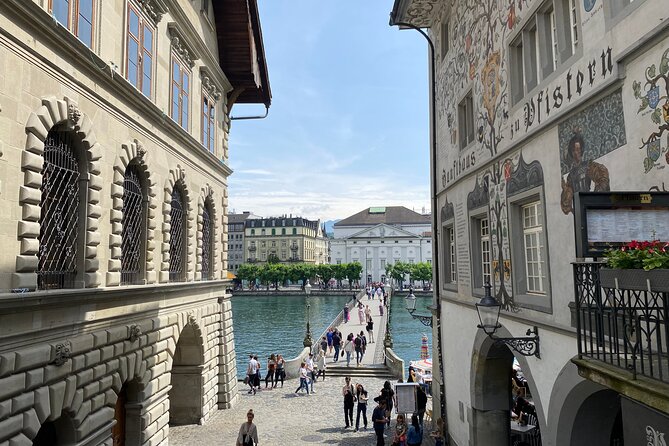
Weinmarkt is one of the richest sections for people who enjoy architecture and painted facades. The square contains many buildings decorated with colorful frescoes, and the tour explains several of them rather than asking you to admire them as anonymous decoration.
You will see the building connected with Lucerne’s first pharmacy. Another fresco shows the transformation of water into wine, a religious image that would have been easy to overlook without context.
You also encounter a scene announcing Lucerne’s entry into the union, an important moment in the development of Switzerland as a united state. This gives the painted buildings a civic role. They were not merely pretty surfaces. They carried religious lessons, local identity, and political messages into public view.
Allow the full twenty minutes here if you can. The main challenge is visual distraction: there is a lot to look at, and a quick glance will not do justice to the details. The written route helps you know which facades deserve your attention.
Hirschenplatz and a gallery of painted facades
At Hirschenplatz, the focus remains on frescoed buildings, but the subjects change. One facade includes a depiction of Goethe. Another recalls the Battle of Dornach. A third connects with the former owner of a jewelry workshop.
These references show the variety of stories packed into Lucerne’s old-town squares. You move from literature to warfare to commerce within a small area. Additional painted buildings add to the scene, so the ten-minute estimate may be tight if you want photographs or close inspection.
I particularly like this part for independent walkers because you can stop at the exact facade that catches your eye. A live guide may keep moving to protect the schedule. Here, you can linger over a figure, inscription, or painted scene without holding anyone up.
The Rathaus, Water Tower, and Chapel Bridge
The route next brings you to Rathaus Stadt Luzern, the city hall. Its medieval character and clock tower give the building a strong civic presence. This is a short stop, but it helps connect the decorated squares with the institutions that governed Lucerne.
Then comes the Water Tower, rising from the river. It is one of the city’s most recognizable structures and makes an excellent viewpoint from the riverbanks. Its past is less pleasant than its appearance suggests. It once served as a prison, where people were subjected to torment.
That contrast is a recurring theme in this walk. Lucerne’s most attractive sights can carry grim stories. The Water Tower is not just a charming piece of river scenery. It also recalls the harsh methods used by earlier authorities.
Chapel Bridge follows, offering the city’s most famous crossing. Painted panels line the covered bridge, using art for education and persuasion. The route gives you a reason to look up instead of rushing across for the standard photograph.
The bridge’s paintings have an entirely different tone from the scenes on Spreuer Bridge, but both crossings use art to shape public ideas. One presents death directly. The other uses religious and civic imagery to teach people how to think about faith, duty, and the city.
St. Peter’s Chapel and the Fritschi Fountain
At Peterskapelle, or St. Peter’s Chapel, examine the facade before moving on. One side shows Saint Niklaus von Flüe, while another fresco presents the symbolic burden of the world.
This is another short stop where the written explanation makes a difference. The exterior is easy to pass, especially with the river and bridge nearby. Knowing what the images represent gives you a reason to pause.
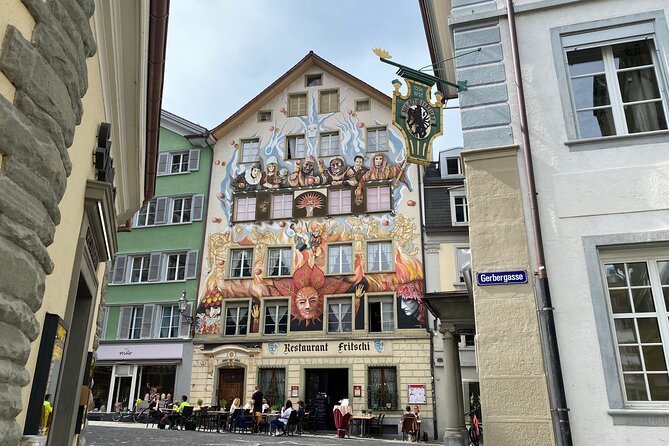
The route then reaches Fritschibrunnen, the Fritschi Fountain. Nearby buildings carry colorful facades, including one that celebrates carnival. Another presents seven figures representing virtues.
This is one of the tour’s livelier moments. The carnival building captures Lucerne’s festive side, while the seven virtues add a moral framework to the surrounding architecture. Together, the fountain and facades show how public spaces could combine celebration, instruction, and local identity.
The suggested ten minutes should work for a general look. Add time if you enjoy photographing details or comparing the different styles of the painted buildings.
Hofkirche and the Lion Monument finale
Hofkirche St. Leodegar offers a grand final church stop. Its symmetrical Gothic towers rise near Lake Lucerne, with sharp spires that make the church easy to recognize from a distance.
Inside and around the church, look for the image of Saint Michael defeating Satan. The subject fits the church’s imposing form and gives the stop a clear visual focus. As with the earlier churches, admission is free, but opening access can vary, so the exterior remains the reliable part of the visit.
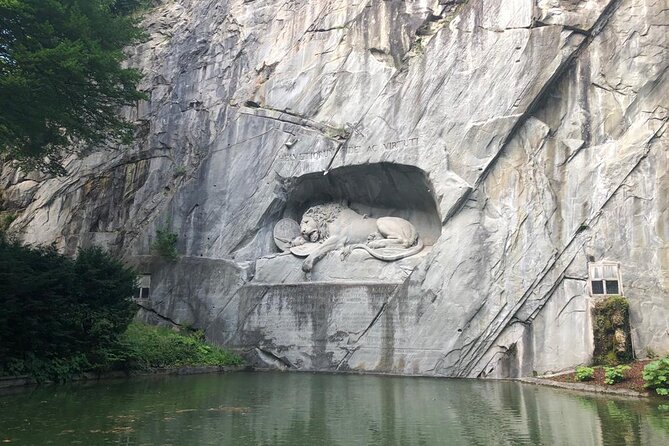
The final destination is the Lion Monument on Denkmalstrasse 4. Carved into a sandstone rock face, the dying lion honors Swiss Guards killed during the French Revolution.
This is a quiet, serious ending after the bright facades, bridges, and carnival scenes. The sculpture is powerful because it does not celebrate victory. It shows suffering and sacrifice, giving the route a final reminder that Lucerne’s story includes loyalty, loss, and political violence.
Ending here is practical as well as emotional. The Lion Monument is a major Lucerne sight, so you finish at a place worth seeing even if you decide to shorten earlier stops.
What $6.24 really gets you
At $6.24 per person, the value is strong. You receive a route covering fifteen stops, directions and photos, explanations of major attractions, and stories connected with more than twenty frescoed houses. You also get material about places many visitors would miss completely.
A live walking tour usually offers conversation and the ability to ask questions. This experience does not. Its strength is low cost and flexibility, not personal interaction.
It is also a private activity for your group only. That means no waiting for strangers and no need to match a guide’s pace. For couples, families, or independent visitors who like to stop often, that can matter more than a polished performance.
The one resource you must supply is your mobile phone with internet. If your connection is poor or your battery is low, the experience becomes harder to follow. Bring a charged phone, and make sure you can open the provided link before leaving your accommodation.
Who should choose this self-guided tour?
I would choose this walk if you want a low-cost introduction to Lucerne and enjoy learning as you look. It suits independent visitors, couples, families with flexible schedules, and anyone who prefers to stop for coffee rather than stay with a timed group.
It is also a good fit for repeat visitors who have already seen Chapel Bridge and the Lion Monument but want more context. The former orphanage, prison, brothel, and executioner’s house add a less polished side of the city.
You may prefer a live guide if you want conversation, local recommendations, or help adjusting the route in real time. The tour is also less suitable if you dislike reading on a phone while walking. Its content is the main attraction, so you need to give it attention.
Free cancellation is available if you cancel at least 24 hours before the local start time. Cancellations inside that window are not refunded, and changes are not accepted within 24 hours.
Should you book it?
Book this tour if you want maximum context for very little money. The route covers Lucerne’s essential sights, but its real strength is the detail between them: painted facades, civic symbols, old institutions, and stories of people who shaped the town.
Skip it if you want a live storyteller or a fully guided conversation. For everyone else, $6.24 is a small price for a more observant walk. Keep your phone charged, allow closer to two hours, and slow down at Weinmarkt, Hirschenplatz, Muhlenplatz, and the two bridges. Those are the places where Lucerne gives up its best secrets.
FAQ
Where does the Lucerne self-guided tour begin?
It begins at Jesuitenkirche Luzern, Bahnhofstrasse 11A, 6003 Lucerne, Switzerland.
Where does the tour end?
The walk ends at the Lion Monument on Denkmalstrasse 4, 6002 Lucerne, Switzerland.
How long does the tour take?
The estimated duration is one to two hours.
How much does the experience cost?
The listed price is $6.24 per person.
Is this a guided walking tour with a live guide?
No. You explore independently using a link provided after booking. There is no live guide.
Do I need a mobile phone and internet?
Yes. You need your own mobile phone with internet access to follow the tour.
Is the tour private?
Yes. Only your group participates in the private activity.
Are admission tickets included?
The listed stops have free admission. The experience does not list separate entry tickets as an included feature.
Is the tour suitable for most people?
The supplied information says most travelers can participate, and service animals are allowed. The route is also near public transportation.
Can I cancel for a full refund?
Yes, if you cancel at least 24 hours before the experience start time. Cancellations made less than 24 hours in advance are not refunded.
Just added in Lucerne
- Private Transfer: Lucerne to Zurich Airport ZRH by Luxury Van★ 4.5 · 6 reviews
- Touristic highlights of Lucerne on a Private half day tour with a local★ 4.0 · 5 reviews
- Weggis Vitznau Foxtrail Helios★ 4.5 · 8 reviews
- Private Transfer: Lucerne to Zurich Airport ZRH by Business Car★ 5.0 · 11 reviews
- Tandem Flight Zurich-Engelberg★ 5.0 · 7 reviews
- The Lives and Legends of Lucerne: A Self-Guided Audio Tour★ 5.0 · 6 reviews
- Panoramic E-Bike Tour with a Lake Cruise★ 5.0 · 10 reviews
- Paragliding Tandem in Switzerland★ 5.0 · 9 reviews
Self-Guided Tours, compared.
Mt. Rigi Self-Guided Tour: Lake Lucerne Cruise and Mountain Spa
Read our review →
Self-Guided Chamonix with Aiguille du Midi or Mer de Glace
Read our review →
Chamonix Self-guided Sightseeing Tour from Geneva
Read our review →
The Best of Basel’s Hidden Treasures: A Self-Guided Audio Tour
Read our review →
Einstein in Zurich: Walk in Time Exploration Game and Tour
Read our review →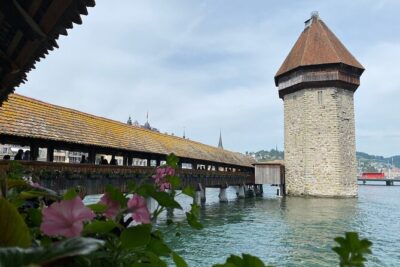
Browse the lists this tour appears in