
Reviewed · WALKING TOURS
Zermatt 2-Hour Small Group Village Walk
Zermatt reveals itself best on foot. This two-hour walk combines old village lanes with stories about the Matterhorn, and I especially like the detour away from Bahnhofstrasse and the stop at the mountaineers’ cemetery. The view from Kirchbrucke bridge is another strong point, giving you the classic Matterhorn photo without committing to a mountain excursion.
The main drawback is the price: $140.55 per person is a serious sum for a two-hour stroll, especially if the group reaches its 15-person limit. Still, the value improves when the guide is one of the local specialists who can answer questions, adjust the pace, and point out details you would probably pass by alone.
In This Review
- Key points to know before booking
- Why a two-hour village walk works well in Zermatt
- Starting at Bahnhofplatz and Bahnhofstrasse
- Modern Zermatt at Gourmetweg
- Old Zermatt on Hinterdorfstrasse
- Tourism begins at the Monte Rosa Hotel
- A quiet pause at the Mountaineers’ Cemetery
- The classic Matterhorn view from Kirchbrucke bridge
- Returning beside the Vispa River
- What the guides add to the experience
- Is $140.55 good value for two hours?
- Who should book this Zermatt walk?
- My recommendation for your Zermatt day
- FAQ
- Where does the Zermatt village walk begin?
- Where does the tour finish?
- How long does the walk last?
- How much does the experience cost?
- What language is the tour offered in?
- How large is the group?
- Does the tour include Matterhorn views?
- Is the walking route difficult?
- Can I cancel for a full refund?
Key points to know before booking
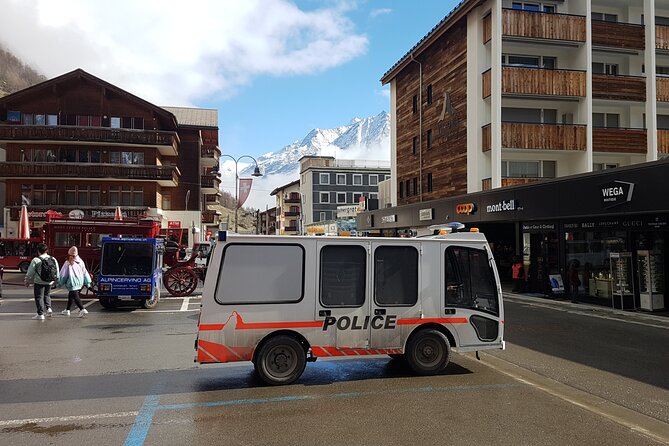
- A local view of Zermatt: The walk leaves the busy shopping street and enters quieter corners of the village.
- Matterhorn stories included: You learn about early climbing history at the Monte Rosa Hotel and mountaineers’ cemetery.
- Strong first-day activity: The gentle route helps you get your bearings before choosing cable cars, museums, or mountain walks.
- Small group, up to 15 people: Some departures may feel almost private if only a few people book.
- Classic Kirchbrucke viewpoint: This is the best planned photo stop, with the Matterhorn behind the village.
- Good guides matter: Abraham, Remi, Tony, Toni, and Mike have all led departures, with praise for their local knowledge, English, humor, and willingness to answer questions.
Why a two-hour village walk works well in Zermatt
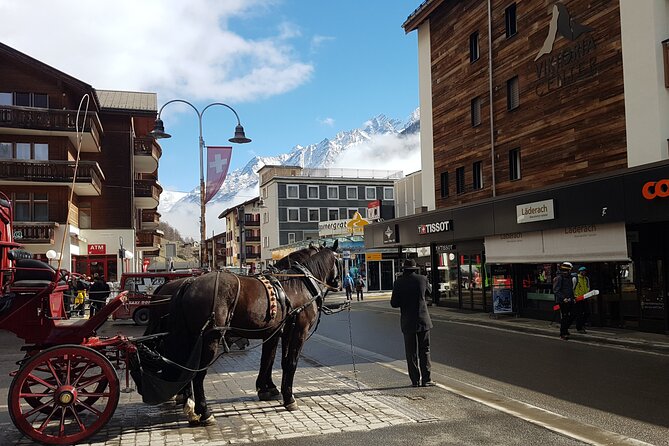
Zermatt is easy to admire and surprisingly easy to misunderstand. The resort has famous hotels, expensive shops, cable cars, mountain trains, and Matterhorn souvenirs at every turn. A quick walk through the center can leave you with a pretty impression, but not much sense of how the village grew.
This tour gives you a short history lesson while keeping your feet moving. You begin at the train station, follow the main commercial street for a short time, then turn into older and quieter parts of Zermatt. That change is important. You see both the polished resort and the farming village beneath it.
I like this format for a first full morning in town. One couple scheduled it after arriving the previous afternoon, which worked well because they had already seen a little of the center and could use the walk to put the village together. You can do the same, or take the tour soon after arrival to get useful orientation before planning the rest of your stay.
The walk is described as easy, and one departure was praised for allowing the couple to set the pace. Still, you should expect regular walking for two hours, including streets, lanes, and the riverside path. Comfortable shoes will make the experience much better.
More Walking Tours in Zermatt:
- Zermatt Village Walk and Mt. Gornergrat Private Day Trip
★ 4.5 · 12 reviews - Zermatt Village Walk and Glacier Paradise Private Day Trip
★ 5.0 · 4 reviews - Wine and Dine Vineyard Walk in Sion
★ 5.0 · 2 reviews
Starting at Bahnhofplatz and Bahnhofstrasse
The meeting point is the Zermatt Tourist Information Center at Bahnhofplatz 5, beside the entrance point for the village. Zermatt’s train station has special importance because the train is the only way for both visitors and goods to reach the village.
That makes the station more than a convenient meeting place. It introduces one of Zermatt’s central facts: this is a mountain resort shaped by its railway connection and its limited road access. You begin with the practical reason the village feels different from many Swiss destinations.
The first stop lasts about 10 minutes and has no admission charge. Your guide meets you there and sets the tone for the walk. Guides have used maps, photos, stories, and plenty of question time, so do not hesitate to ask about the village, Switzerland, or mountain activities.
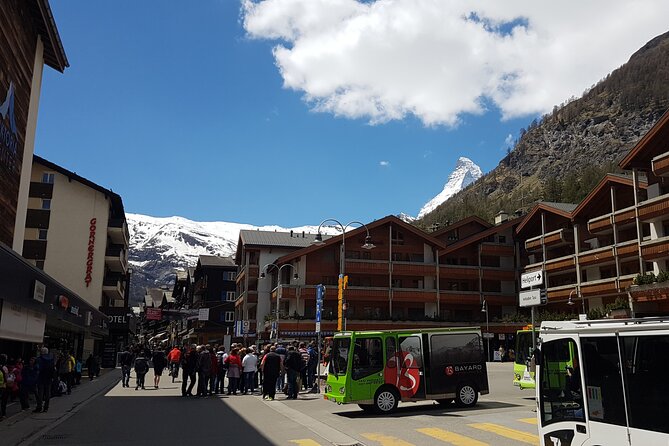
From Bahnhofplatz, you walk along Bahnhofstrasse for another 10 minutes. This is Zermatt’s best-known shopping street, with the commercial side of the resort on full display. It is useful to see, but it is not the heart of the tour.
The smart part comes next. You turn left away from the crowds and move toward less obvious streets. This shift is one of the main reasons to book a guide instead of simply following the main road with a phone map.
Modern Zermatt at Gourmetweg
Gourmetweg gives you a look at the newer side of Zermatt. You pass the tennis court, which becomes a natural ice rink during winter, and examine modern buildings that contrast with the older structures ahead.
This is a small stop, about 10 minutes, but it helps explain the village’s two identities. Zermatt is both an old alpine settlement and an active resort with newer apartments, hotels, and sports facilities. Seeing the newer architecture before entering the historic quarter makes the change easier to understand.
The stop also keeps the tour from becoming a simple parade of old buildings. You see how the village continues to adapt to visitors and winter sports. The guide can help connect what you see to Zermatt’s tourism growth.
Old Zermatt on Hinterdorfstrasse
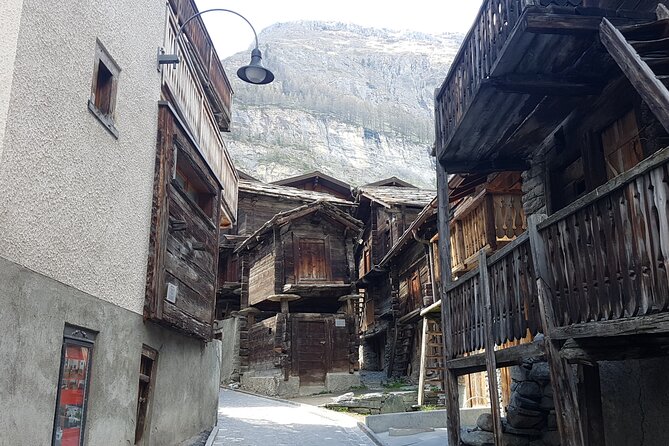
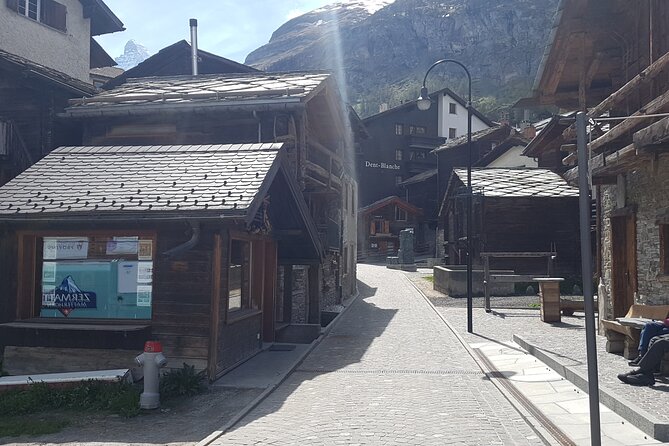
Hinterdorfstrasse is the architectural center of the walk. Here, you enter the old part of Zermatt and see how buildings were constructed centuries ago.
The stop lasts about 20 minutes, longer than most of the early stops. That gives your guide time to explain the flat-stone rooftops, old barns, and narrow alleyways. Some barns are more than 200 years old, and the lanes offer a sharp contrast to the shop windows of Bahnhofstrasse.
The flat-stone roofs are especially worth paying attention to. They are not just a decorative feature for photographs. Your guide explains the practical reason behind them, giving you a better sense of how people once built for local conditions.
This is where a local guide earns the fee. You can photograph an old barn on your own, but you may not understand why it looks the way it does or how it fitted into village life. The best guides also connect the buildings to everyday work, food, mountain travel, and the changes brought by tourism.
Tony, also identified as Anton Imoberdorf, has been praised for beginning with a map and basic Swiss history before walking through town. His clear English and willingness to handle many questions made the route more useful for first-time visitors. You should not assume he will lead your departure, but that kind of approach is exactly what makes this tour work.
More Zermatt trips:
- Private Ski Lessons – 3 hours Zermatt
★ 5.0 · 279 reviews - Matterhorn Paragliding flight in Zermatt (20-25min)
★ 5.0 · 207 reviews - FLYMATTERHORN VIP Paragliding from Zermatt, With Matterhorn View
★ 5.0 · 192 reviews - 20 to 25 Minute Tandem Paragliding in Zermatt and Matterhorn View
★ 5.0 · 40 reviews
Tourism begins at the Monte Rosa Hotel
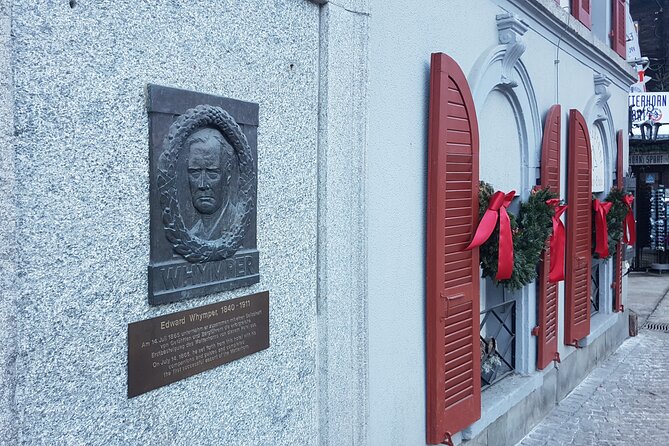
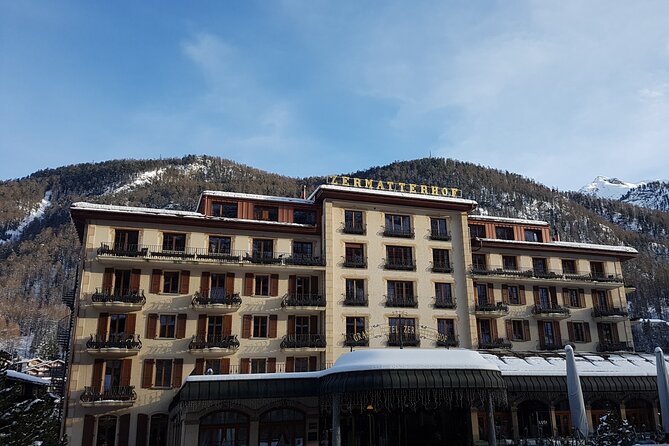
The Monte Rosa Hotel marks a major turn in the story. At this hotel, you learn about the start of Zermatt’s tourist growth and the first ascent of the Matterhorn.
This stop takes about 10 minutes. It is brief, but the subject is large. The Matterhorn made Zermatt famous, and the hotel connects the mountain to the people, money, and early visitors who changed the village.
The focus is not only on scenery. You hear about the first ascent and the role of mountaineering in Zermatt’s rise as an alpine resort. For many people, this is the point where the village becomes more than a postcard setting.
If you plan to visit the Matterhorn Museum later, the tour can give that visit more context. One guide even joined a couple at the museum after the walk. That was an extra kindness, not something you should expect as part of every departure, but it shows how a flexible guide may help you shape the rest of your day.
A quiet pause at the Mountaineers’ Cemetery
The mountaineers’ cemetery is one of the most moving stops. It honors climbers who died on the Matterhorn and nearby alpine peaks.
You spend about 15 minutes here. The stop adds weight to the mountain story, reminding you that the Matterhorn is not only a beautiful backdrop or a goal for ambitious holiday photos. Climbing it has always carried real danger.
Several departures placed special emphasis on the cemetery and the history of climbing. It is also known as a climbers’ Walk of Fame in the tour conversation, though the mood is respectful rather than celebratory. Take a quiet moment here and listen. This is not a place to rush through while checking your camera.
The cemetery may be particularly useful for families and first-time visitors who want to understand the human cost behind alpine adventure. It gives the Matterhorn a more serious place in the story of Zermatt.
The classic Matterhorn view from Kirchbrucke bridge
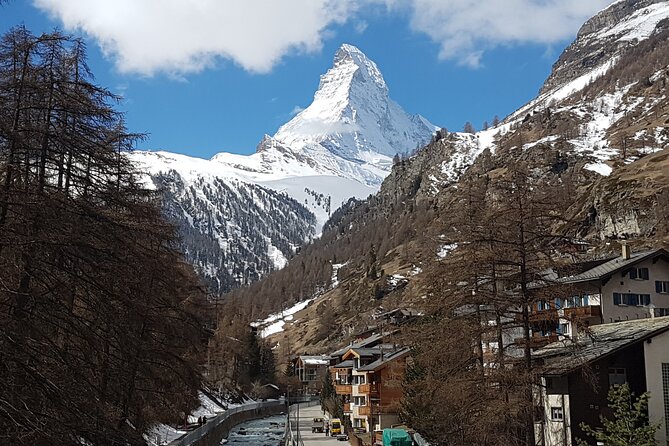
At Kirchbrucke bridge, the tour reaches its most obvious photo stop. The viewpoint gives you the typical Zermatt image, with the Matterhorn rising behind the village.
The stop lasts about 15 minutes. Your guide allows time for photographs and can help you make the most of the view, especially if clouds are moving across the mountain. One couple saw only part of the Matterhorn through the clouds, so you should keep your expectations sensible. Weather controls this stop, not the tour schedule.
This viewpoint is valuable because it does not require a cable car, mountain train, or long hike. You get a memorable mountain view as part of a village walk. If the summit is hidden, the tour still has its village history, architecture, and cemetery, but the photo opportunity may be less dramatic.
Ask your guide about the best angle and the weather conditions. Guides have been praised for stopping often so people can take pictures rather than forcing the group through the route.
Returning beside the Vispa River
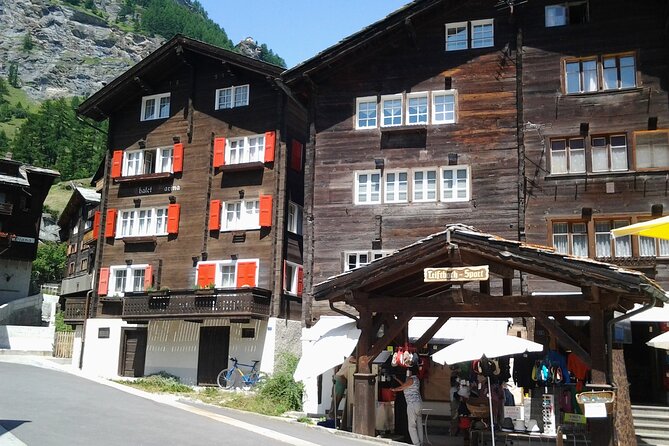
The final section follows the Uferweg along the Vispa River and lasts about 30 minutes. You pass hotels and newer apartments, then go by the Sunnegga cable car station before returning along Getwingstrasse to the train station.
This is the longest stretch of the route, and it helps link the different parts of Zermatt. You have seen the station, shopping street, modern buildings, old barns, hotels, and mountain memorials. Along the river, you see how the resort continues beyond its postcard center.
The Sunnegga cable car station is a useful landmark if you are planning a mountain outing. The guide may help you understand where it is, and one guide assisted visitors with buying tickets for an observation trip after the walk. Ticket help is not listed as a standard feature, so treat that as a possible courtesy rather than a promise.
The tour finishes back at the original meeting point. That is convenient if you have luggage plans, a train connection later, or another activity nearby. It also makes the walk easy to fit into a busy Zermatt day.
What the guides add to the experience
The route is good, but the guide is the real reason to consider paying for it. The strongest feedback centers on local stories, clear explanations, friendliness, and the freedom to ask questions.
Guides named in the feedback include Abraham, Remi, Tony, Toni, and Mike. Remi was praised for being a native of the area and for bringing local lore, photos, and stories into the walk. Mike was described as professional and especially good at explaining Zermatt’s cultural importance alongside its tourism.
Tony, or Anton Imoberdorf, received praise for his strong English, humor, and patience with frequent questions. Abraham was praised for stopping often for photographs and explaining the town clearly.
You cannot choose a specific guide from the information provided, so guide style may vary. Still, the pattern is clear: this is designed as a personal walking experience, not a recorded audio route or a rushed group transfer.
The maximum group size is 15 people. That is small enough for questions, though a full group will feel different from a departure with only two or three people. Several bookings ended up with just a couple or a very small party, creating a private-tour feel at the regular rate.
Is $140.55 good value for two hours?
At $140.55 per person, this is not a cheap orientation walk. You are paying for two hours, and there are no admission tickets included because the route uses public streets, viewpoints, the cemetery, and outdoor areas.
The value depends on what you want. If you only need directions or a quick look at the old quarter, you can walk around Zermatt independently. The price is harder to justify for a visitor who prefers to read plaques, take photos, and move on.
I think the cost makes more sense if you care about context. A local guide can explain why the roofs are flat stone, how the old barns worked, why the train station matters, and how the first Matterhorn ascent changed the village. You also get a planned route that avoids some of the commercial center.
The value improves if you are new to Zermatt, have limited time, or want to ask many questions. It also improves if your group becomes very small. At the full 15-person limit, expect less individual attention and consider the price carefully.
Who should book this Zermatt walk?
I would recommend it most strongly to first-time visitors who want a clear introduction before choosing mountain activities. It gives you a useful base for the rest of your stay without taking an entire day.
It suits couples, families with children, and older visitors who prefer a gentle cultural walk instead of a demanding alpine route. Children must be accompanied by an adult, and most people can participate.
You should also book it if you want the local side of Zermatt rather than only shops and cable cars. The turn away from Bahnhofstrasse is one of the best features, and the old quarter gives you details you might miss alone.
It is less suitable if your priority is a long Matterhorn hike, a high mountain excursion, or a full museum program. The tour stays in and around the village. It offers a viewpoint of the Matterhorn, not a trip up the mountain.
The experience is offered in English, uses a mobile ticket, and is available near public transportation. Service animals are allowed. Free cancellation is available until 24 hours before the start time, but changes or cancellations inside that window are not refunded. Poor weather or failure to meet the minimum group size can lead to a new date or a full refund.
My recommendation for your Zermatt day
Book this walk early in your stay if you want history, village details, and a guide who can answer questions. The best plan is to leave the rest of the day open for the Matterhorn Museum, a cable car, or a meal recommendation from your guide.
I like the tour because it avoids treating Zermatt as scenery alone. You see the shopping street and modern resort, but you also enter old lanes, study 200-year-old barns, hear about dangerous climbs, and pause where the village first connected with mountaineering tourism.
At $140.55, it is a premium introduction, not a bargain stroll. For a first visit, especially with a small group and an engaging local guide, I think the added context can be worth it. If you already know Zermatt well or prefer independent wandering, save the money and explore the same streets at your own pace.
FAQ
Where does the Zermatt village walk begin?
It begins at the Zermatt Tourist Information Center, Bahnhofpl. 5, 3920 Zermatt, Switzerland.
Where does the tour finish?
The tour ends back at the original meeting point near the tourist information center and train station.
How long does the walk last?
The experience lasts approximately two hours.
How much does the experience cost?
The listed price is $140.55 per person.
What language is the tour offered in?
The tour is offered in English.
How large is the group?
The maximum group size is 15 people. Some departures may have far fewer participants.
Does the tour include Matterhorn views?
Yes. The route stops at the Kirchbrucke bridge viewpoint, where you can photograph the Matterhorn behind Zermatt. Cloud cover can affect the view.
Is the walking route difficult?
The walk is described as easy, and most people can participate. It includes village streets, old lanes, and a riverside path.
Can I cancel for a full refund?
Yes. You can cancel at least 24 hours before the start time for a full refund. Cancellations or changes made less than 24 hours before the start are not refunded.
Just added in Zermatt
- Zermatt’s Alpine Charms – Private Guided Village Tour★ 5.0 · 6 reviews
- Zermatt Guided Day Hike★ 5.0 · 6 reviews
- Zermatt (Tasch) to Milan one way Private Transfer★ 5.0 · 1 review
- Private Mystic Zermatt Tour: Peaks, History & Culture★ 4.5 · 6 reviews
- Matterhorn Private Skiing Day Zermatt★ 5.0 · 9 reviews
- Private Mt. Gornergrat and Zermatt Tour★ 5.0 · 15 reviews
- Zermatt (Matterhorn) Private Transfer Service★ 5.0 · 1 review
- Private Snowboarding Lessons – 3 Hours Zermatt★ 5.0 · 9 reviews
Walking Tours, compared.
Zurich Walking Tour With Cruise and Aerial Cable Car
Read our review →
Lucerne Walking & Boat Tour: The Best Swiss Experience
Read our review →
3 in 1: Zurich Walking Tour – Cruise on the Lake – Cable Car Ride to Felsenegg
Read our review →
Glacier 3000 Ticket Including Cable Car and Peak Walk by Tissot
Read our review →
Zurich Private Customizable Guided Walking Tour
Read our review →
Bern Walking Tour: Explore Top Sights & Hidden Gems
Read our review →Browse the lists this tour appears in